
Dosing technology
Load-cell vs volumetric ATEX filling.
Compare mass-based and volumetric dosing using the product, pack, declared quantity, cleaning method and reproducible acceptance criteria.
Measurement scope
This guide compares general filling principles. It does not establish legal metrology compliance, guarantee an accuracy value or select a hazardous-area protection concept. The required quantity declaration and test method should be confirmed for the product and market.
Decide what quantity the process must control.
Load-cell filling controls the measured mass of the container and product. Volumetric routes control a displaced or measured volume through a piston, pump, time/flow relationship or flow meter, depending on the system. Both can be practical, but they respond differently to product density, temperature, air entrainment, supply conditions and container tare.
The strongest decision starts with the declared quantity, the product range and the measurement method used by production quality control. A machine should not be selected solely because “weighing is accurate” or “volumetric is faster”; those statements are incomplete without the operating case.
Technology comparison
Use product and pack evidence to select the control method.
| Factor | Load-cell / gravimetric route | Volumetric route |
|---|---|---|
| Primary measured quantity | Mass measured through a weighing platform or load cells. | Volume displaced or inferred/measured by the dosing device. |
| Container effect | Tare variation, platform stability, vibration and pack contact with surrounding equipment need control. | Container variation mainly affects handling and nozzle position; the dose is controlled separately. |
| Product variables | Foam, movement and dynamic settling can affect when a stable weight is obtained. | Density, temperature, viscosity, slip, compressibility or flow profile may affect the relationship between control and delivered quantity. |
| Typical project fit | Often investigated for jerrycans, pails, drums and larger fills where mass-based control is preferred. | Often investigated for bottles and repeatable doses where piston, pump or flow-meter technology suits the product. |
| Cleaning and changeover | Product path still needs the same compatibility and drainability review; the weighing system adds platform and cable considerations. | The dosing device, seals, cylinders, meters and pipework can add product-retention and cleaning questions. |
| Hazardous-area design | Both routes require project-specific review of equipment location, electrical and non-electrical ignition risks, static, product transfer, controls and documentation. | |
When load-cell filling deserves a closer look.
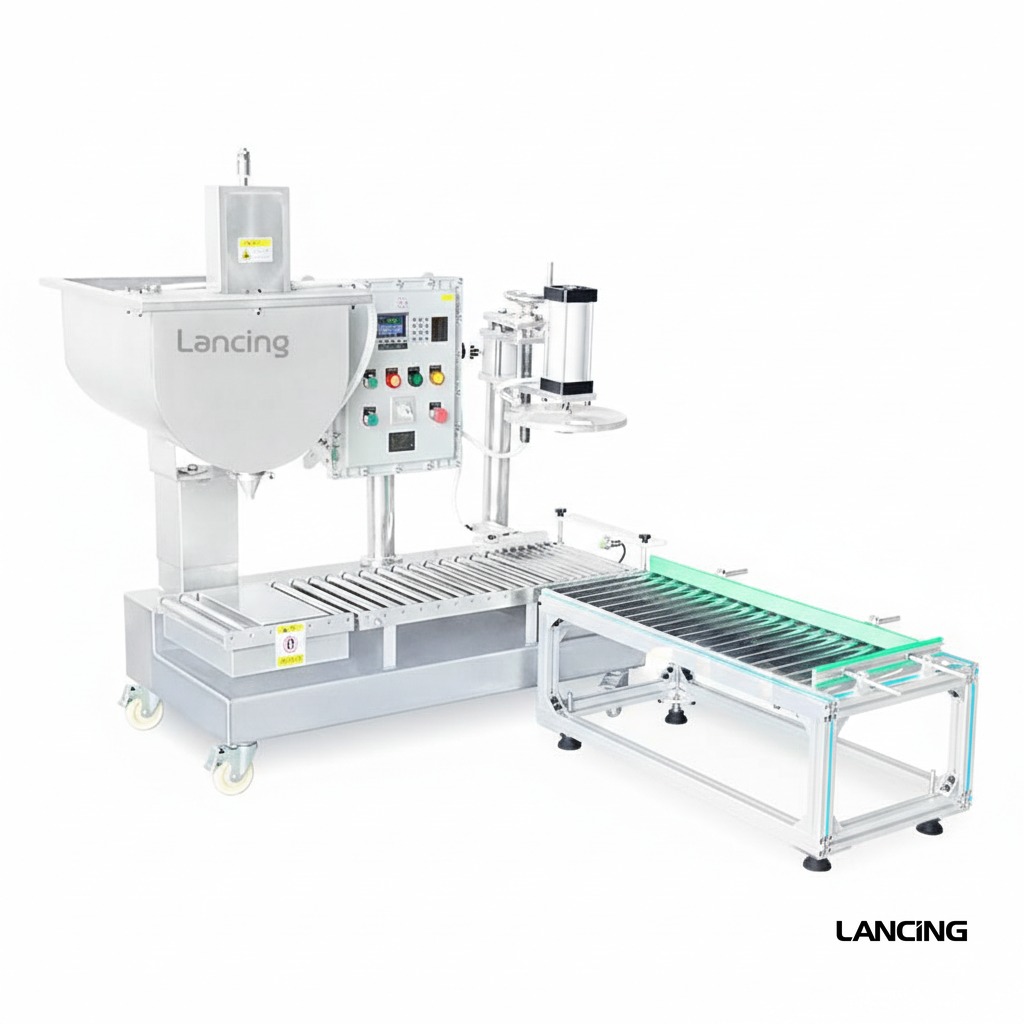
Mass-based control can be attractive where larger containers are already handled on a platform, the process specification is written in mass, or product density varies in a way that makes volume conversion undesirable. The ATEX weigh filling page describes the site’s published 10–30 litre reference platform and its project boundaries.
The design must prevent the container, hose or operator from bypassing the measurement. Tare method, roller arrangement, nozzle forces, vibration and the timing of coarse and fine flow should be included in the trial.
When volumetric filling deserves a closer look.
Volumetric technology can support bottle and small-pack production where a compatible piston, pump or flow route provides a repeatable dose and manageable cleaning method. Product supply pressure, viscosity and cut-off behaviour need to remain within the agreed operating envelope.
The automatic ATEX filler can be configured around different dosing technologies where technically suitable. The specific route is confirmed from the product, pack, output and hazardous-area brief.
Trial and measurement plan
Make the comparison reproducible.
- State whether acceptance is based on net mass, gross mass, volume or another controlled quantity.
- Define container tare handling and how variable bottles or drums are treated.
- Record product temperature, density and any conditioning before the test.
- Use calibrated or otherwise agreed reference equipment and a written sampling method.
- Include start-up, steady running, recipe change, refill of the product supply and controlled stopping.
- Report individual results, not only an average that can hide high and low fills.
For general non-ATEX volumetric technology, volumetricfillers.co.uk provides broader context. This guide remains focused on selection within a hazardous-area filling project.
Selection FAQs
Load-cell and volumetric filling questions.
Does a load-cell filler measure volume?
A load-cell system measures mass. If a declared volume is required, the relationship to density and operating temperature must be handled in the product and quality method.
Is volumetric filling unsuitable for flammable liquids?
No. Piston, pump and suitable flow-measurement routes may be used in hazardous-area projects when the complete equipment, product and intended use are correctly assessed. The choice is an engineering decision, not a blanket rule.
Which method is better for changing density?
Mass measurement avoids converting the measured quantity from volume, but the commercial declaration and process still need to be understood. Product aeration, container tare and dynamic weighing behaviour can also influence results.
Can the same comparison be made without product samples?
A preliminary shortlist is possible from product data, but a representative trial is normally the stronger way to observe flow, foam, cut-off, retained product and measurement repeatability.
What should be stated in the acceptance criteria?
State whether the target is mass or volume, the reference temperature where relevant, container tare method, sampling plan, measurement equipment, tolerances, test duration and treatment of rejects.
Your machine recommendation
Tell us what you need to fill — we’ll recommend the most suitable machine.
Send your product SDS, container details, fill range, target output and any ATEX information. You’ll receive a practical shortlist matched to your application.
☎ 01494 623015✉ sales@lancinguk.comDirect support for new machines, line upgrades and complete filling projects.
Additional comparison
Need to compare load-cell filling with an in-line flowmeter?
The existing guide separates gravimetric and volumetric principles. The new flowmeter versus load-cell ATEX filling guide goes further into density, tare, air entrainment, meter installation, calibration, cleanability and acceptance testing.