Automatic
Automatic ATEX filling
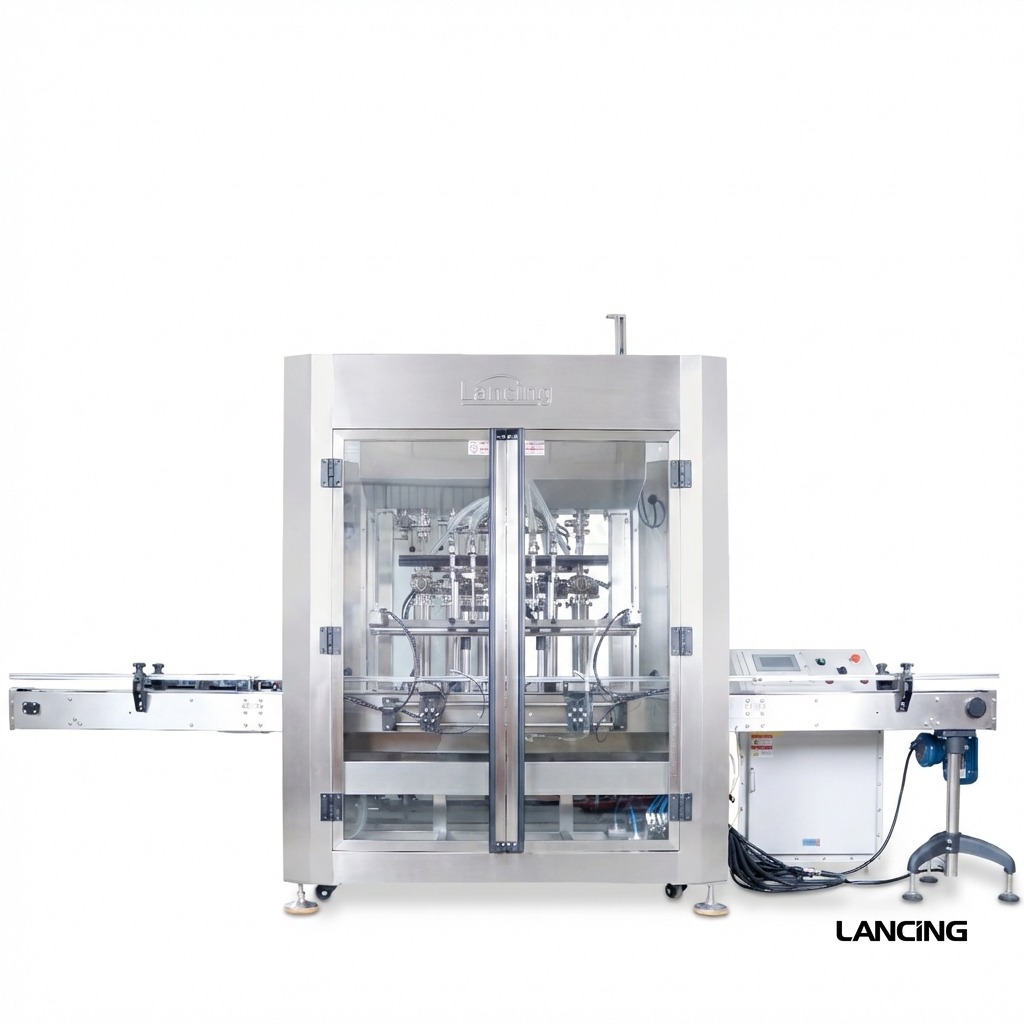
Multi-head or compact automatic filling with a dosing route selected for small bottles.
View solution
Volatile personal-care liquids
Fill perfume bases, body mists and alcohol-rich products accurately, with the right dosing, container handling and closure equipment for your production.
Application factors
Alcohol-rich products can release flammable vapour, influencing the zone, ventilation and machine category.
Nozzle size, dosing principle and container presentation matter for low-volume precision filling.
Glass bottles, narrow necks and decorative packs need careful guiding and change parts.
Pumps, sprays, collars and caps may require several coordinated placement and crimping stages.
Tubing, seals and pumps need compatibility with fragrance oils and alcohol formulations.
Multiple fragrances and short runs benefit from a practical product-path and cleaning strategy.
Machinery shortlist
Multi-head or compact automatic filling with a dosing route selected for small bottles.
View solutionFilling, pump placement, closure application and labelling planned as one line.
View solutionLower-output systems for short runs, contract packing and frequent fragrance changes.
View solutionQuote checklist
FAQs
Yes, suitable dosing and bottle-handling routes can be considered, but the neck opening, fill volume, bottle stability and closure sequence need to be tested or reviewed.
Yes. Pump insertion, collar crimping and cap application can be integrated where the closure samples and required output are defined.
No. The full SDS, flash point, formulation, operating temperature, ventilation and workplace assessment are needed.
Your machine recommendation
Send your product SDS, container details, fill range, target output and any ATEX information. You’ll receive a practical shortlist matched to your application.
☎ 01494 623015✉ sales@lancinguk.comDirect support for new machines, line upgrades and complete filling projects.
Precision and vapour control
Alcohol percentage alone does not define a perfume or personal-care project. The current SDS, flash point, formulation, fill temperature and ventilation conditions should be combined with the bottle, pump, collar, crimp and cap sequence.
Provide the minimum and maximum fill, bottle height, base stability and neck opening. Small variations in bottle presentation can affect nozzle entry, splash and dose repeatability. The dosing route should be trialled at the lowest fill and the intended sustained output, not only at a convenient mid-range volume.
Where several fragrances are filled, define cross-contamination limits, drainability, flush media and product recovery. Tubing, seals and pumps should be reviewed for both the formulation and the cleaning method.
Supply real pump or spray closures, dip tubes, collars and overcaps. The line needs to control insertion depth, crimp or torque, bottle support and rejected closures. The closure stage can also influence how long an open filled bottle remains exposed before sealing.
The hazardous-area boundary should include the points where alcohol vapour may be released, including product supply and cleaning. Extraction and machine permissives should be assigned clearly between the equipment and facility scopes.
| Trial condition | What to verify |
|---|---|
| Smallest dose and neck | Nozzle access, splash, dose measurement and bottle stability. |
| Closure family | Pump insertion, dip-tube control, collar crimp or cap torque and rejection. |
| Product change | Drain, flush, retained fragrance, cross-contamination and restart procedure. |
| Sustained run | Open-bottle time, filling output, closure replenishment and downstream balance. |
Yes, where it is an intended use. Formulations can differ in flash point, compatibility, viscosity, cleaning and odour carry-over. Grouping products is possible only where the technical basis and changeover method are documented.
Integrated or coordinated filling and closure routes can be considered. Bottle support, pump insertion, crimp dimensions, output, guarding and the classified-area requirements must be developed from actual samples.
Use representative bottles, pumps, collars and caps with the agreed product or safe test medium. Verify dosing, splash, open-bottle transfer, insertion, crimp or torque, rejects, changeover and the controls or interlocks included in scope.
Further selection
Use the ATEX bottle filling guide for neck, closure and line questions; compare automatic and semi-automatic routes; and include alcohol-compatible cleaning media in the changeover plan.
Fragrance filling verification
For fragrance and alcohol-based bottles, glass variation, foam and the time before closure can make visible fill levels and weigh-check results disagree. Agree whether the sale quantity is specified by mass or volume, how density is established when needed, and what packaging is present at the check. A neat fill line is a presentation requirement; it is not a substitute for quantity evidence.
Use an agreed safe method and keep the state consistent across the trial. Closing can help control volatile loss, but any cap, pump or crimp assembly present during weighing must be accounted for correctly. Record the timing and packaging state rather than comparing unlike checks and compensating the filler for the difference.
Bring fill-accuracy verification together with pump and closure handling when specifying the line. Include the largest closure component and the most awkward bottle, not only a simple test bottle.
Send the finished fragrance SDS, bottle and pump or cap samples, declared quantity and quality-check method.
Share your SDS, hazardous-area information, containers, fill volumes, target output and any capping or labelling stages.