Positive displacement
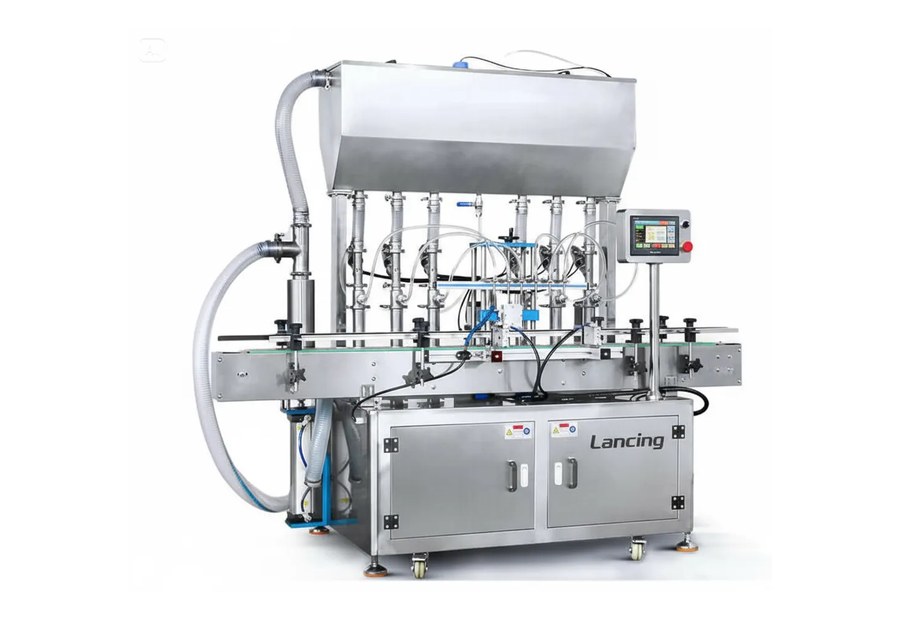
Automatic piston filling
A configured piston or pump route for repeatable filling of compatible viscous products.
View solution
Viscous hazardous products
Control viscosity, stringing and nozzle cut-off when filling solvent-based paints, coatings, adhesives and sealants in a classified area.
Application factors
Product thickness and temperature influence piston size, pump selection, fill speed and product feed.
Shut-off, anti-drip or suck-back nozzles can help control strands and messy cut-off.
Flammable carriers may require hazardous-area assessment even when the finished product is viscous.
Fillers, pigments and curing behaviour can affect valves, seals, cleaning and maintenance.
Heavy, open or handled containers need stable positioning and practical lid or cap application.
Residue, curing and multi-colour production make access and cleaning strategy critical.
Machinery shortlist
A configured piston or pump route for repeatable filling of compatible viscous products.
View solutionWeigh filling and diving-nozzle options for pails, cans and larger industrial packs.
View solutionPlan closure application, labelling and conveying with the filler from the start.
View solutionQuote checklist
FAQs
Some can, but stringing, curing, abrasiveness, solvent content, viscosity and cleaning must be assessed against the valve, seals, cylinder and nozzle.
Yes. Solvent-based or flammable formulations may require hazardous-area assessment and additional controls even when the product is thick.
Heating and agitation can be considered where technically appropriate, but temperature, ignition risk, product stability and cleaning must be included in the design review.
Your machine recommendation
Send your product SDS, container details, fill range, target output and any ATEX information. You’ll receive a practical shortlist matched to your application.
☎ 01494 623015✉ sales@lancinguk.comDirect support for new machines, line upgrades and complete filling projects.
Product behaviour
Paints, coatings, resins, sealants and adhesives can change significantly with temperature, batch age and shear. A useful trial records the condition of the sample and tests the nozzle, valve and product supply at the intended dose and sustained rate.
Positive-displacement piston or pump filling may suit many viscous products, but abrasives, particles, curing behaviour and solvent content affect the choice. The nozzle must close cleanly enough to control strings and drips without excessive pressure or product damage.
Heating, agitation or recirculation can be considered where technically appropriate, but each adds surfaces, drives, controls and cleaning requirements to the ignition-risk and compatibility review. The machine should not heat a product beyond the conditions used in the SDS and site assessment without a specific engineering decision.
Test the smallest neck opening and the least stable pack, together with the heaviest intended dose. Pails, tins, cartridges or bottles may need different centring, nozzle travel and transfer. Lids and caps should be included because open-container travel can influence vapour and contamination control.
Define pot life, cure risk and the maximum time product may remain in the system. Cleaning should identify flush media, dismantled parts, dead legs, retained product and waste. Where the solvent or flush medium is flammable, clean-down is a separate hazardous operating mode.
| FAT observation | Acceptance basis |
|---|---|
| Fill profile | Product temperature, pressure, speed, nozzle position and result for each target quantity. |
| Stringing and drip | Agreed visual or measured condition before the pack moves to closure application. |
| Product recovery | Drainability, retained quantity, flush route and time needed to reach the agreed clean state. |
| Changeover | Required tools, settings, parts, recipe control and verification before restart. |
The trial plan should cover the credible operating range, including the most demanding viscosity, temperature or stringing condition where practical. One easy-flowing sample should not be used to qualify a materially different production case.
Heating may be possible, but the temperature control, hot surfaces, equipment protection, product stability and failure conditions require specific assessment. It should never be added as a generic option without the declared zone and temperature requirements.
Agree the product condition, dose, cycle rate, nozzle type and observable acceptance limit before the test. Record any string, drip or contamination after cut-off and confirm that the next capping or transfer stage remains reliable.
For non-hazardous viscous filling in general, broader technology ownership sits with volumetricfillers.co.uk and liquidfillers.co.uk. This page retains the solvent and hazardous-area focus.
Further selection
Compare load-cell and volumetric control using density, viscosity and pack size. Review semi-automatic filling for varied campaigns and define retained product, stringing and cleaning through the changeover guide.
Batch release and different formulations
A filled coating can meet its quantity target and still be unsuitable if pigments have settled, a previous colour remains in the product path or incompatible components have contacted one another. Keep batch preparation, transfer condition, dosing and final quality release as separate acceptance topics. A short test with a freshly mixed product does not establish behaviour after the normal production hold or stoppage.
Use the product supplier’s approved conditioning method and agree how representative samples will be taken across the run, including the intended hold and restart conditions. Record both quantity and the relevant product-quality observations. Do not assume that agitation, recirculation or an added filter is acceptable without confirming its effect on the finished coating.
It needs separate operating cases. A finished single-pack coating is delivered as one product; a two-pack kit requires controlled component quantities, identity, segregation and kit assembly. Mixed reactive dispensing is another task again. State which operation is required instead of treating viscosity as the only difference.
For the detailed application boundary, use solvent-based ink filling or resin and hardener packaging. For quantity evidence, use the verification method.
Include conditioning, colour-change and kit-release requirements alongside the SDS and container range.
Share your SDS, hazardous-area information, containers, fill volumes, target output and any capping or labelling stages.