Upstream
Container handling
Unscramblers, rinsers, infeed tables and conveyors can present containers consistently to the filler and reduce manual handling.
Explore conveyor options
Equipment around your filler
Plan the equipment before and after the filler as one coordinated process, so containers move reliably and every line stage supports your required output.
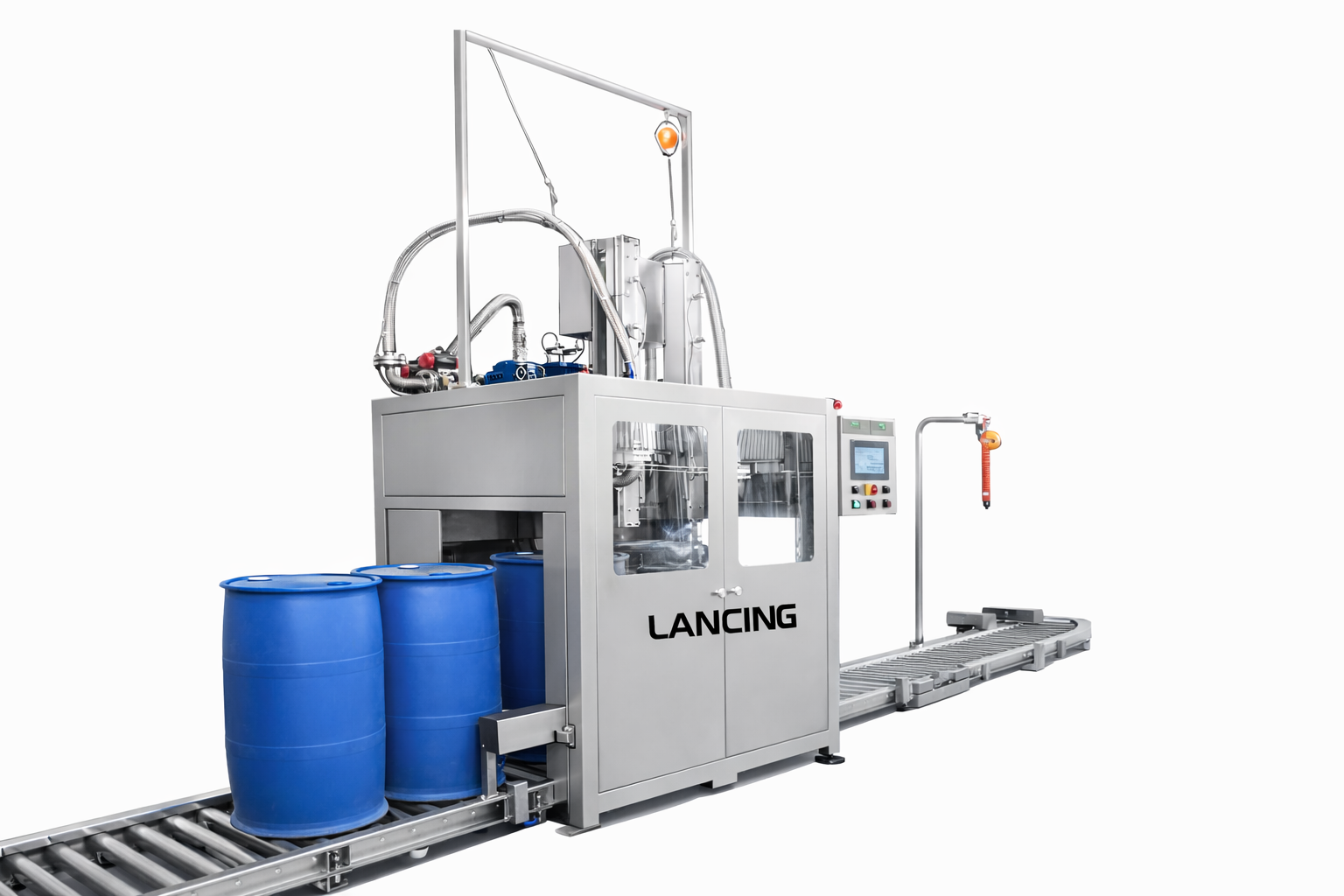
Plan every line stage
We can help you consider container presentation, filling, closure application, coding, labelling, conveying and end-of-line handling as one production flow.
Unscramblers, rinsers, infeed tables and conveyors can present containers consistently to the filler and reduce manual handling.
Explore conveyor optionsMatch screw caps, pumps, triggers, ROPP closures, induction seals or other formats to your container and required output.
Explore capping equipmentPlan label application, date or batch coding and inspection so they remain compatible with the product, container and operating area.
Explore labelling machineryCoordinate sensors, accumulation, guarding, stop conditions and operator controls so each machine supports the same production target.
Explore automation optionsConsider cartoning, case sealing, shrink wrapping and discharge handling early enough to avoid bottlenecks after filling.
Explore packaging equipmentAdd capacity, change container formats or replace a weak line stage with equipment selected around your current layout and controls.
Discuss a line upgradeOne coordinated project
Planning the complete production flow helps prevent container instability, speed mismatches, unsuitable controls and last-minute changes around the hazardous area.
Start with your application
We’ll help you identify the filling and packaging equipment that should be considered together.
Get my line recommendationTechnical resource library
These guides support the enquiry, quotation, FAT and handover process for hazardous-area filling projects.
Choose operator-assisted or conveyor-fed filling from the complete production task.
Compare mass-based and volumetric control using declared quantity and trial evidence.
Identify product, protection, automation, site and evidence items that change scope.
Coordinate layout, utilities, extraction, earthing, drainage and SAT.
Define isolation, draining, flushing, format settings and verified restart.
Retain the approved equipment condition through competent, recorded checks.
Map release sources, capture, monitoring and machine response.
Write cause-and-effect logic, safe states, recovery and FAT/SAT tests.
Turn samples, acceptance criteria and deviations into controlled evidence.
Line evidence
Review open-pack transfer, cap presentation, container stability, line stops, rejects and the hazardous-area boundary before the capper layout is fixed.
Connect the line equipment schedule, intended duty, instructions, cause-and-effect records, FAT and SAT actions to the same approved project basis.
Classification and line controls
Define the duty for equipment across the filler, capper, conveyors and connected systems.
Coordinate building systems with product isolation and filling-line safe states.
Plan the market, documentation and responsibility boundaries for the complete line.
Additional engineering resources
Scale, nozzle arm, pallet access, product feed and finished-pack handling.
Measurement choice, meter installation, tare, product condition and acceptance.
Oxygen control, monitoring, ventilation and machine interlocks.
Process-engineering resources
Match pump behaviour to measurement, nozzles, pressure, cleaning and safe-state control.
Define the endpoint, abnormal trip, final isolation, containment and test evidence.
Understand how protected components fit into the complete filling-line assessment.
Packaging-line verification
The filler, capper and downstream quantity check must use consistent pack identity and measurement assumptions. Define whether a check occurs before or after closure, what happens to suspect containers and how a stop affects open packs. An instrument chosen for a non-hazardous location must not be assumed suitable beside the filler.
Use accuracy and checkweighing evidence for the verification boundary. For ink colour changes and two-component kit packing, carry the product-identity and clean-state checks into the finished-pack release record.
Share your SDS, hazardous-area information, containers, fill volumes, target output and any capping or labelling stages.