
Measurement-method selection
Flowmeter vs Load-Cell ATEX Filling
Compare two common ways to control hazardous-area liquid fills by looking at what is actually measured, which product variables matter and how the result will be tested.
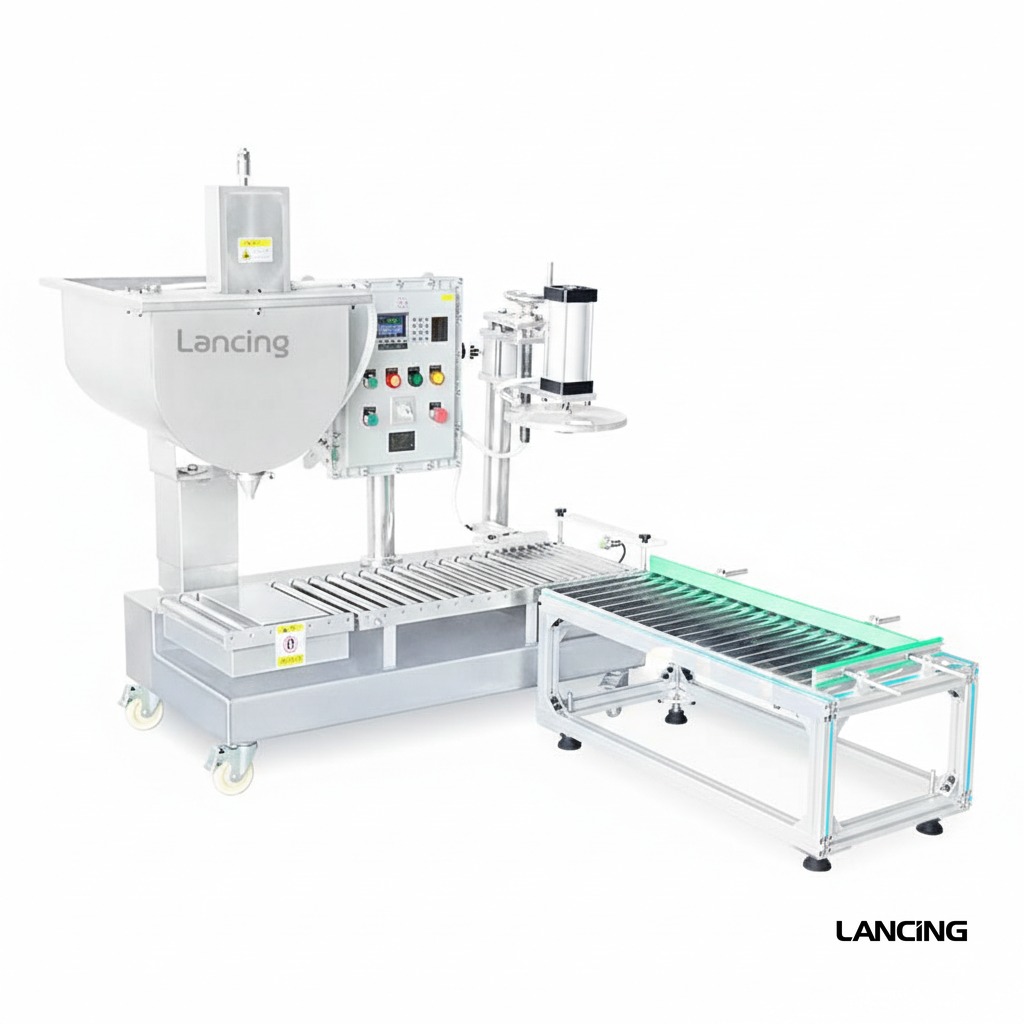
Direct answer
A flowmeter measures product passing through the line; a load cell measures the change in container mass.
Neither method is universally more accurate or more suitable for ATEX filling. The reliable choice depends on the product’s density, temperature, viscosity, conductivity and gas content; the variation in container tare; the pipework and pump; the required fill quantity; cleaning and changeover; the hazardous-area protection concept; and how the customer will verify the result during product trials, FAT and production.
A useful specification therefore starts with the required accepted-pack result rather than the instrument name. State whether the target is mass or volume, the allowed tolerance, the test method, the actual product conditions and the range of containers. Lancing can then review load-cell, flowmeter, positive-displacement or other project-specific routes without forcing the application into the wrong measurement principle.
Decision table
How the two measurement routes differ.
| Selection factor | Load-cell filling | Flowmeter filling |
|---|---|---|
| Primary measurement | Increase in the mass supported by the scale. | Quantity calculated from product moving through the meter. |
| Container tare | Can be measured or tared for each pack when the process is configured accordingly. | Does not depend directly on container tare, but the delivered quantity still needs an agreed verification method. |
| Density | Mass measurement is not converted from density unless a volume result is required. | Density and temperature may matter where the meter or acceptance result uses volume or inferred mass. |
| Mechanical environment | Needs a stable scale, controlled vibration, no unwanted contact and suitable load distribution. | Needs a correctly sized meter, stable flow profile, compatible materials, adequate pressure and controlled air or gas content. |
| Product path | The weighing instrument sits outside the wetted path, although the complete filler still requires compatible product-contact parts. | The meter is part of the wetted path and must be compatible, cleanable and suitable for the hazardous-area duty. |
| Large containers | Often attractive where net mass and variable tare are important. | Can be effective where the meter range, product condition and pipework support stable measurement. |
| Changeover | Scale setup and recipe targets may change; product-path cleaning remains. | Meter cleanability, residual product, calibration and product-specific settings may add changeover tasks. |
Load-cell route
What can disturb a weigh fill?
- Conveyor rollers, hoses or guards touching the weighed platform.
- Vibration from pumps, forklifts or nearby machinery.
- Product still in flight between the shut-off point and the container.
- Foam collapse or product movement during the acceptance reading.
- Unstable pallets, off-centre loads or changing container support.
- Drafts, extraction forces or mechanical strain on the filling lance.
Coarse and fine fill stages, pre-act timing and a stable acceptance window are normally developed during representative testing.
Flowmeter route
What can disturb a flow measurement?
- Air, vapour or entrained gas passing through the meter.
- Flow outside the meter’s suitable operating range.
- Density or temperature changes where conversion is involved.
- Pulsation, poor straight-run conditions or an unsuitable pump.
- Product coating, solids, viscosity or chemical attack affecting the sensor.
- Residual product or cleaning fluid changing the first fill after changeover.
The meter type and installation must be selected around the real fluid and verified under the intended production conditions.
Acceptance
Define the result before comparing quoted accuracy figures.
State the target
Define net mass, gross mass, volume at stated conditions or another agreed result.
State the tolerance
Separate process capability, target setting, measurement uncertainty and legal-metrology requirements.
State the test
Agree the reference instrument, sample size, product conditions, stabilisation time and treatment of rejects.
Selection sequence
Five questions that normally resolve the measurement route.
- What result must the customer accept? Mass, volume or another process value.
- How stable is the product? Review density, temperature, aeration, viscosity, solids and conductivity.
- What varies in the pack? Tare, support, shape, opening, capacity and handling route.
- What must be cleaned? Meter, pipework, valves, hoses, pumps and nozzle as well as the vessel or supply system.
- How will it be proven? Agree representative samples, calibrated references, FAT scope and SAT conditions.
For an overview of other dosing families, use the existing load-cell versus volumetric ATEX filling guide. For large packs, review the ATEX IBC and 200 litre drum filling page.
Buyer questions
Questions about flowmeter and load-cell ATEX filling.
Does a flowmeter remove the need to know product density?
Not always. A meter may report volume or mass depending on its principle, and the customer may accept a different quantity. Density and temperature can still be important for conversion, product behaviour, pump sizing and verification.
Does a load cell automatically correct for container tare?
A scale can support tare measurement, but the machine sequence must actually capture or apply the correct tare. The container must also sit freely on the scale without hoses, rollers or guards transferring force.
Which method is easier to clean?
The scale itself is outside the product path, while a flowmeter is wetted. However, both systems include valves, pipework, pumps and nozzles that must be cleaned. The best route depends on product recovery, dismantling, flushing and cross-contamination requirements.
Can the same meter handle solvents and viscous products?
Only when the meter principle, flow range, materials, seals, pressure loss and cleaning method suit both products. A broad product family should not be assumed from one successful liquid.
Can a flowmeter or load cell be used in Zone 1?
Potentially, but the complete equipment and installation must match the competent hazardous-area classification, gas group, temperature class and protection concept. A standard instrument does not become suitable merely because it is connected to an ATEX filler.
Choose from evidence
Send the product, pack and acceptance method for a configured recommendation.
Lancing can compare measurement technologies against the complete hazardous-area filling duty rather than a headline instrument specification.