
Practical ATEX filling advice for your product, packs and production target

Download-free project brief

ATEX Filling Machine Specification Checklist

Use this checklist to gather the product, hazardous-area, pack, output, utility and support information needed for a faster, more useful technical quotation.

Use the checklist
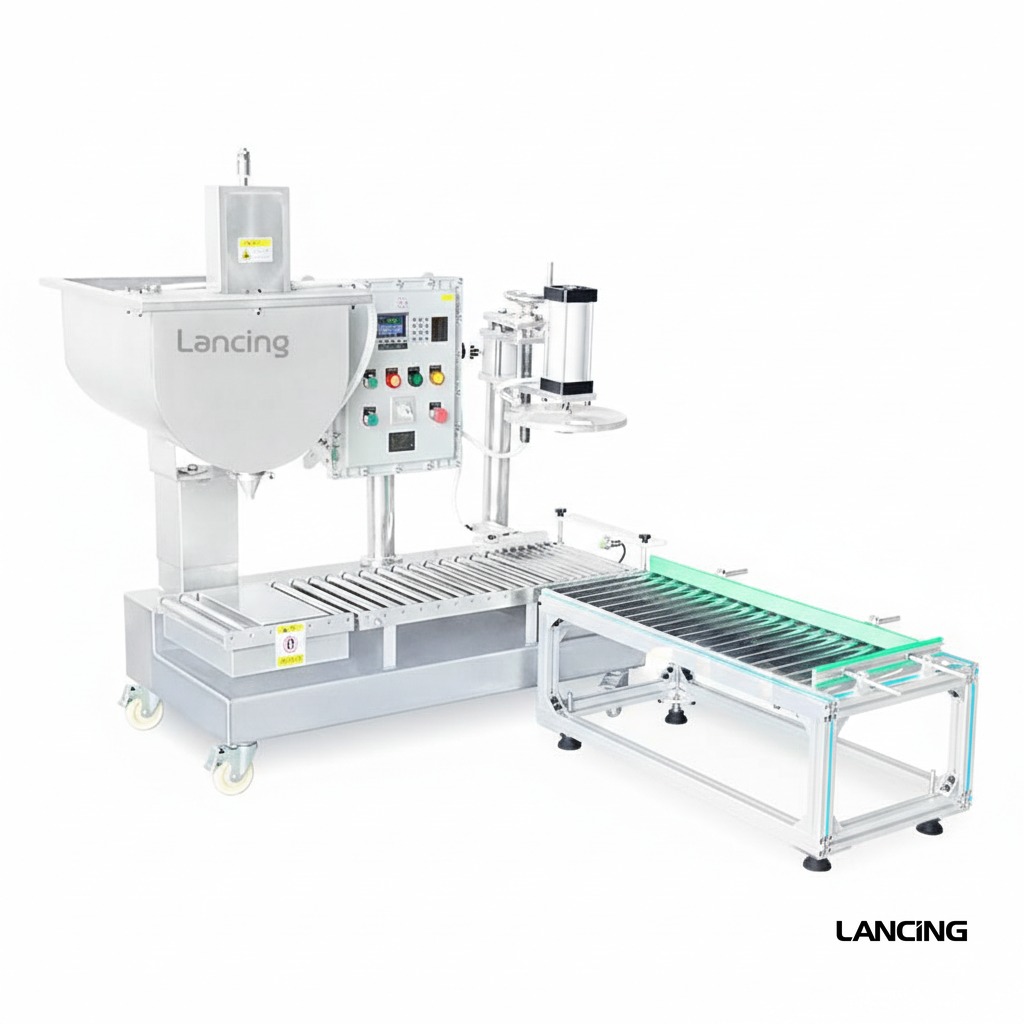
ATEX filling station for larger containers

Project data

Complete as much as possible before quotation.

Unknown items can be marked “to be confirmed”. The goal is to expose assumptions early, not delay the first conversation.

1. Product and hazard

  • Product name and SDS revision
  • Full formulation or concentration where relevant
  • Flash point, auto-ignition data and operating temperature
  • Viscosity, density, conductivity, foam and particles
  • Corrosion / seal / hose compatibility
  • Cleaning product and changeover method

2. Area classification

  • Zone and physical boundaries
  • Gas or dust group
  • Temperature class / maximum surface temperature
  • Equipment category / EPL requirement
  • Existing DSEAR assessment and drawings
  • Ventilation, extraction and gas detection

3. Container and closure

  • Container material and drawings
  • Minimum and maximum dimensions
  • Neck finish or opening size
  • Fill range and target tolerance
  • Closure samples and torque / crimp / press requirement
  • Label and coding specification

4. Performance and layout

  • Sustained output target
  • Batch sizes and changeover frequency
  • Manual, semi-automatic or fully automatic preference
  • Available footprint and conveyor height
  • Product supply tank, pump distance and pipework
  • Air, power and other utilities

5. Delivery and support

  • Required FAT and sample trials
  • Installation and commissioning scope
  • Training and documentation language
  • Starter spares and critical spares
  • Maintenance and inspection responsibilities
  • Target delivery date and site access constraints

Useful attachments

Files that improve the machine shortlist.

  • Current product SDS and technical data sheet.
  • Container, cap and label drawings.
  • Photos or video of the current manual process or existing line.
  • Hazardous-area classification drawing.
  • Factory layout with access and utility points.
  • Example production schedule and changeover pattern.

Send files by email

Large attachments can be sent to sales@lancinguk.com. Include the project name and a contact number.

Checklist FAQs

Preparing the enquiry.

Can I send the checklist before the zone classification is complete?

Yes. Mark the classification as pending and provide the competent assessor or project contact. The machinery shortlist can begin, but the final hazardous-area specification cannot be closed without the required classification information.

Do you need physical samples?

Samples are strongly recommended where viscosity, foam, stringing, particles, container stability, closure handling or fill tolerance are difficult to predict from data alone.

Should downstream equipment be included in the first enquiry?

Yes. Even if only the filler is being purchased, capping, labelling, conveyors, existing line height and controls affect the practical specification.

Your machine recommendation

Tell us what you need to fill — we’ll recommend the most suitable machine.

Send your product SDS, container details, fill range, target output and any ATEX information. You’ll receive a practical shortlist matched to your application.

☎ 01494 623015✉ sales@lancinguk.com

Direct support for new machines, line upgrades and complete filling projects.

Protected by built-in anti-spam checks. No third-party CAPTCHA or tracking service is used.

Responsibility checklist

Record who supplies, approves and verifies each critical input.

Attach a named owner and required date to every open item. An assumption that is visible in the quotation can be managed; an assumption hidden inside a generic description is more likely to cause redesign or an unsafe interface.

Input or deliverableTypical ownerStatus to record
Current SDS and formulation dataPurchaser/product ownerReceived, revision date, products covered and outstanding variants.
DSEAR assessment and zone drawingSite operator/competent assessorApproved, preliminary or pending; boundaries and assumptions identified.
Machine intended-use specificationPurchaser and LancingProducts, packs, operating modes, output, cleaning and exclusions agreed.
Extraction and facility servicesNamed site or project designerPerformance criterion, interface, interlock, installation and commissioning owner.
FAT protocol and test materialsPurchaser and LancingApproved protocol, samples, instruments, run length and acceptance limits.
SAT and handoverSite/project team with Lancing scope definedInstallation checks, production test, training, documents and open actions.

Sample trial and FAT

Turn the commercial requirement into measurable acceptance criteria.

Before the test

  • Identify the exact product or representative medium and the reason it is representative.
  • Record temperature, viscosity, density and any preparation or mixing condition.
  • Provide the smallest and largest containers, every closure family and required change parts.
  • Define target quantities, measurement instruments, sample size and permitted limits.
  • Agree sustained output, run duration, replenishment and operator involvement.
  • List alarms, interlocks, rejects, extraction or earthing interfaces to be simulated.

After the test

  • Record actual settings, results, deviations, photographs or video where authorised and open actions.
  • Separate product-performance findings from conformity or site-classification conclusions.
  • Confirm cleaning, drainage, retained product and the condition required before dismantling.
  • Identify every check that remains dependent on the final installation and belongs in SAT.
  • Freeze the tested product, pack and recipe envelope or record the additional trials required.
  • Update the approved specification and change-control record before manufacture continues.
Can water be used instead of the real solvent at FAT?

Only where the parties document why it is representative for the functions being tested. Water may not reproduce viscosity, density, foam, vapour, conductivity, compatibility or cut-off. Any untested product behaviours should remain explicit open risks or require a separate product trial.

How many fills should be measured?

The sample size should be agreed from the process, target tolerance, variation and purpose of the test. There is no single number suitable for every product. The protocol should state the warm-up, measurement sequence, instruments and statistical or pass/fail method before testing begins.

Should cleaning be included in FAT?

Where cleaning is part of the intended operation, representative drain, flush, dismantling and restart steps should be demonstrated or otherwise verified. Site waste services and final cleaning validation may remain installation-dependent, but the machinery access and flow path should not be left untested.

Open the full trials and FAT guide

Need a filling system that fits your product, packs and output?

Share your SDS, hazardous-area information, containers, fill volumes, target output and any capping or labelling stages.

Get my machine recommendation
Call 01494 623015Get a quote