
Practical ATEX filling advice for your product, packs and production target

Nozzle and fill-profile selection

Top Fill vs Bottom Fill for Flammable Liquids

Choose between a fixed top-fill nozzle and a controlled bottom-up diving nozzle by testing foam, splash, vapour, pack access, cleaning and fault behaviour.

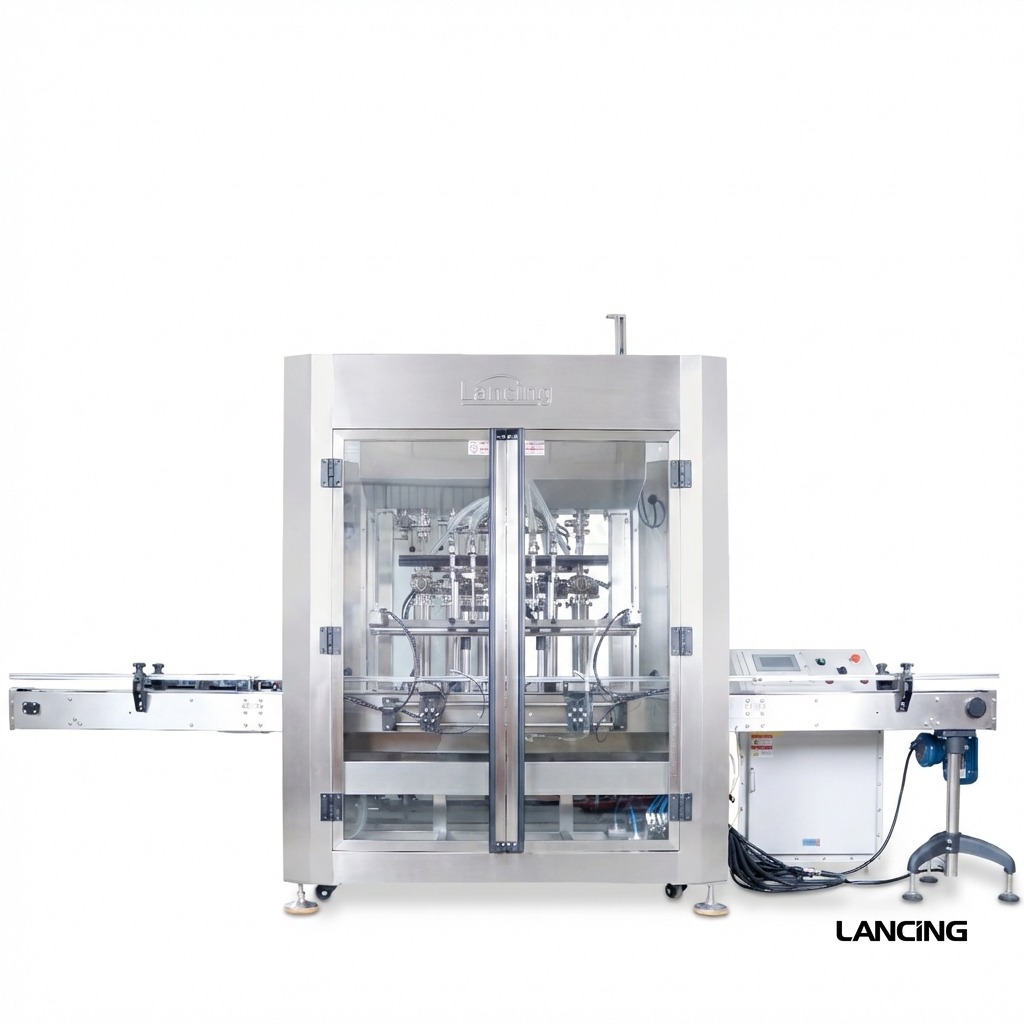
Automatic ATEX filling machine with nozzles for comparing top-fill and bottom-up filling

Direct answer

Top filling delivers product from near the container opening; bottom-up filling follows the rising liquid level.

Top fill is generally the simpler route when the product does not foam or splash excessively and the container can accept the discharge safely. Bottom-up filling uses a diving nozzle that enters the container and rises during the fill. It can reduce free fall, splash and foam for suitable liquids, but it adds moving parts, recipe control, cleaning requirements and potential contact with the product.

Neither method is automatically safer for every flammable liquid. The selection must consider vapour release, electrostatic charging, nozzle wetting, container geometry, fill speed, cleaning, extraction and the declared hazardous-area conditions. The most reliable choice is demonstrated with the real product and production containers under an agreed trial and FAT method.

Comparison table

Choose the fill profile from product behaviour and pack geometry.

Selection factorTop fillBottom-up / diving-nozzle fill
Nozzle movementNozzle remains above or just inside the container opening.Nozzle descends before flow and rises as the liquid level increases.
Foam and splashCan be suitable for stable, non-foaming products and controlled flow.Can reduce free fall and help with foamy or splash-sensitive products.
Vapour releaseMore free fall can increase turbulence for some products.Lower discharge height may reduce turbulence, but the open pack and displaced vapour still require assessment.
Container accessUseful where the neck is too small or irregular for a diving assembly.Requires sufficient neck clearance, alignment and stable container positioning.
CleaningUsually has fewer moving surfaces around the nozzle mechanism.Travel tubes, guides and wetted nozzle surfaces add cleaning and inspection tasks.
Control sequenceCan use a simpler start, fill and cut-off sequence.Needs safe positions, descent confirmation, staged lift and fault recovery.
Product contactNozzle may remain clear of the rising liquid.Nozzle can be immersed or close to the liquid, so wetting and drip control matter.

Bottom-up sequence

Define every nozzle movement as part of the fill recipe.

  1. Confirm the correct container is present and stable.
  2. Verify any earthing, extraction and line permissives required before filling.
  3. Move the nozzle to the agreed start position without contacting the pack incorrectly.
  4. Begin at the required coarse or low-flow stage.
  5. Raise the nozzle by time, volume, mass, level or another validated control basis.
  6. Finish the fill, close the valve, control residual drip and return to a safe position.

Practical limits

Bottom-up filling is not a universal cure for vapour or foam.

  • A narrow, flexible or variable neck may not locate reliably around a moving nozzle.
  • Liquid on the nozzle exterior can drip onto the container or conveyor.
  • The mechanism must fail to a defined safe state if the pack moves or the nozzle jams.
  • Foam may still be generated by the pump, valve, entrained air or product recirculation.
  • Extraction must be designed around the moving nozzle and open container.
  • Cleaning and product changeover can take longer than with a fixed nozzle.

Buyer questions

Questions to resolve before specifying nozzle travel.

Does bottom-up filling remove the need for extraction?

No. Bottom-up filling may reduce free fall and turbulence, but it does not remove the open-container release or displaced vapour. Extraction, containment and area classification must be reviewed for the complete operating and fault case.

How is nozzle lift controlled?

Nozzle lift can be based on time, delivered quantity, measured mass, position steps or another validated recipe. The method must remain stable across the product range and handle stops, foam, low supply pressure and container variation.

Can a diving nozzle touch the product?

Some processes use an immersed or near-surface discharge, while others keep the nozzle clear. The decision affects product wetting, hygiene, static, cleaning, drip control and the risk of the nozzle contacting the container.

Which method is faster?

Top fill can have a shorter mechanical cycle, but total output depends on foam, splash, settling, cut-off and downstream acceptance. A faster nozzle movement does not help if the product needs a slower fill or extended settling time.

Trial and FAT evidence

Test the fill profile using the production liquid and the full container range.

  • Measure foam height, settling time, splash and accepted fill result.
  • Record nozzle start height, lift profile, coarse/fine flow and cut-off settings.
  • Check minimum and maximum container necks and tolerances.
  • Run line stops, missing-container, jam and nozzle-position fault cases.
  • Confirm cleaning access, drain-down, drip control and changeover time.
  • Agree what evidence is retained for FAT and what remains for SAT.

Authoritative context

Area classification must reflect release sources and foreseeable failures.

HSE describes hazardous-area classification as an analysis of normal and foreseeable release sources, with suitable controls selected around the resulting risk. The nozzle, open container, displaced vapour, pump and cleaning sequence all belong in that process review.

Read HSE guidance on hazardous-area classification and ignition-source control.

Need a filling system that fits your product, packs and output?

Share your SDS, hazardous-area information, containers, fill volumes, target output and any capping or labelling stages.

Get my machine recommendation
Call 01494 623015Get a quote