
Practical ATEX filling advice for your product, packs and production target

Nozzle and product-behaviour question

How do you choose a filling nozzle for flammable or volatile liquids?

Nozzle selection follows the liquid, container opening, fill profile, release scenario, shut-off behaviour and cleaning method rather than diameter alone.

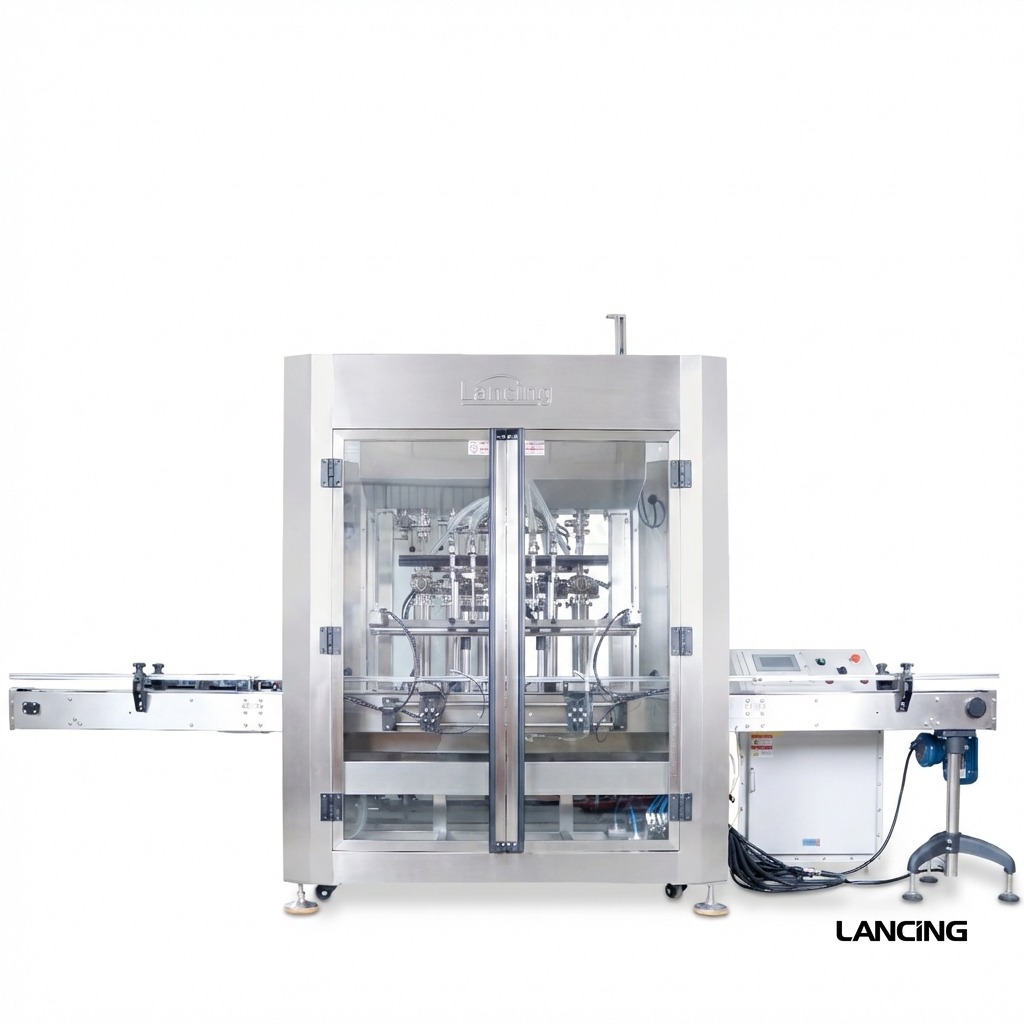
Automatic ATEX filling machine used to explain filling-nozzle selection for flammable liquids

Direct answer

A filling nozzle for a flammable or volatile liquid is selected from the product behaviour, container opening, required fill profile, release scenario, shut-off and drip performance, cleanability and hazardous-area operating case. Diameter alone is not enough. The nozzle must work with the pump or dosing method, avoid collisions, control the product after cut-off and support the agreed containment and extraction strategy.

Use representative product and containers to prove the physical result. The competent risk assessment determines the controls required for the release and environment.

Nozzle selection framework

Match the fill profile to the liquid and the real container opening.

Selection factorQuestion to answerTest evidence
Product flow and behaviourIs the liquid thin, viscous, foaming, splash-prone, stringing or particle-bearing?Representative fill at normal and limiting process conditions.
Container geometryWhat is the opening, depth, shoulder shape, neck tolerance and presentation accuracy?Samples across the expected supply range and line positioning test.
Nozzle movementIs fixed top fill adequate, or is controlled insertion/withdrawal required?Collision clearance, fill-surface behaviour, travel profile and recovery checks.
Shut-off and cleaningHow are in-flight product, drips, residues and cleaning fluids controlled?Cut-off repeatability, drain-down, disassembly or clean-in-place sequence as applicable.

Buyer questions

Three questions to settle during a representative filling trial.

When is bottom-up or subsurface filling considered?

Bottom-up or subsurface filling is considered when controlled nozzle travel may reduce splash, foam, exposed fall distance or another product-specific problem. It is not automatically required for every flammable liquid and does not replace ventilation, containment or ignition-source controls.

The trial should define insertion depth, start position, withdrawal profile, minimum container clearance, response to a missing or wrong pack, and the condition reached if movement is interrupted.

How do foam, splash and stringing affect nozzle choice?

Foam, splash and stringing affect the outlet shape, fill velocity, nozzle position, shut-off method, dwell and withdrawal profile needed for an acceptable pack. The effect can change with temperature, head pressure, product level and batch variation.

Test the most challenging justified formulation and pack, record the acceptance method and avoid relying on a clean water demonstration when the production behaviour is materially different.

How should shut-off, drip control and drain-down be tested?

Test shut-off by observing and measuring the agreed post-fill behaviour over repeated cycles, including in-flight product, hanging drops, stringing, nozzle withdrawal and the period before closure. Then test the controlled drain-down and cleaning sequence so residues are not ignored after production stops.

Define what counts as an unacceptable drip or contaminated pack, how the area is contained and how the operator responds to a nozzle fault or partial dose.

Container data the nozzle designer needs

  • Opening diameter and tolerance.
  • Neck height, shoulder profile and container depth.
  • Presentation accuracy and line guide contact points.
  • Material, stiffness and stability when empty and filled.
  • Fill range and expected liquid level.
  • Closure route and allowable product on the neck or rim.

Product and process data

  • Viscosity, density and temperature range.
  • Foam, splash, stringing, solids and wetting behaviour.
  • Product supply pressure and flow limits.
  • Volatility and release information from the competent assessment.
  • Cleaning fluid, drain-down and changeover method.
  • Required measurement and acceptance criteria.

Use flammable-liquid guidance as context, not a generic nozzle prescription.

HSE’s safe use and handling of flammable liquids guidance and DSEAR guidance support the risk-control context. Final nozzle, extraction and equipment decisions depend on the real product and site assessment.

Your machine recommendation

Tell us what you need to fill — we’ll recommend the most suitable machine.

Send your product SDS, container details, fill range, target output and any ATEX information. You’ll receive a practical shortlist matched to your application.

☎ 01494 623015✉ sales@lancinguk.com

Direct support for new machines, line upgrades and complete filling projects.

Protected by built-in anti-spam checks. No third-party CAPTCHA or tracking service is used.

Need a filling system that fits your product, packs and output?

Share your SDS, hazardous-area information, containers, fill volumes, target output and any capping or labelling stages.

Get my machine recommendation
Call 01494 623015Get a quote