
Practical ATEX filling advice for your product, packs and production target

Container and static question

Can plastic containers be filled in a hazardous area?

Plastic containers may be fillable in a hazardous area, but their insulating or dissipative behaviour must be assessed with the product, process and complete static-control strategy.

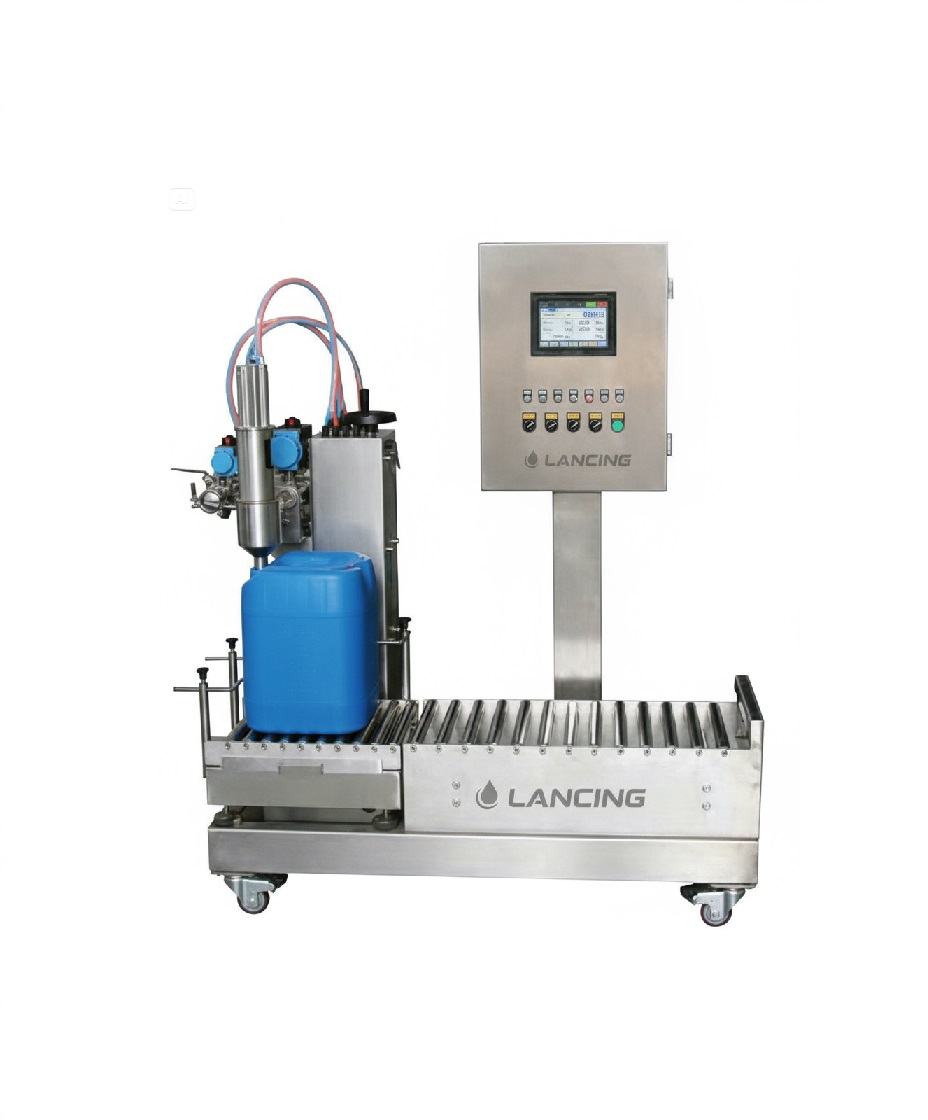
ATEX jerrycan and drum filling machine used to explain plastic-container static considerations

Direct answer

Plastic containers may be filled in a hazardous area only after the actual container, liquid, fill method and static-control strategy have been assessed together. Many plastics are insulating, so a clamp attached to the container does not automatically provide the conductive path available with a suitable metal vessel. The project must consider charge generation, charge dissipation, people, product conductivity, equipment, environment and the complete pack journey.

The machinery supplier needs representative containers and the site needs competent electrostatic-risk input. The controls may involve more than one measure and should not be reduced to a generic clamp specification.

Container assessment

Identify what can conduct, what can hold charge and what changes during filling.

Container or interfaceQuestion to resolveEvidence to gather
Metal containerIs there a reliable conductive path through coatings, liners, handles and contact points?Container construction, connection point and monitored bonding/earthing method where required.
Plastic containerIs the material insulating, dissipative or a controlled conductive construction?Supplier data, actual samples, product and environmental conditions, handling sequence.
Product pathWhere can charge be generated by flow, filtration, splash, separation or movement?Product conductivity where known, pipe and hose materials, flow conditions and nozzle profile.
Operator and lineWhat people, floors, tools, closures and conveyors enter the operating case?Site procedures, footwear/flooring strategy, equipment connections and competent risk assessment.

Buyer questions

Three questions to ask before approving a plastic pack.

Why can plastic containers complicate static control?

Plastic containers can complicate static control because an insulating surface can retain charge and does not necessarily provide a path that can be verified by earthing the way a conductive metal item can. Charge may arise from liquid flow, splashing, contact and separation, conveyor movement, labels or handling.

The risk depends on the complete process, not the word “plastic”. Obtain material and construction data, use actual samples and assess the product, environment and operations that can create or dissipate charge.

Can an earthing clamp make a plastic jerrycan conductive?

No, an earthing clamp cannot make an ordinary insulating plastic jerrycan conductive. It may connect a genuinely conductive or dissipative feature if the container is specifically designed and documented for that purpose, but contact with an insulating wall does not create a reliable discharge path.

Do not infer performance from colour, appearance or a metal cap alone. The competent static-control strategy should define which item is connected, how continuity is established and what condition is monitored before filling.

What should be tested with the actual plastic container?

Test container stability, nozzle access, fill profile, splash and foam, surface wetting, movement, closure fit, labels or liners, handling and any defined static-control connection with representative packs. Include the expected supplier variation and the container at the real operating temperature where that changes stiffness or behaviour.

A machinery trial does not replace the electrostatic risk assessment. It supplies physical evidence about the pack and process that the competent assessment can use.

Information for the machinery review

  • Container manufacturer, material and construction data.
  • Dimensions, neck opening, handle, liner, label and closure.
  • Empty and filled mass, base stiffness and movement method.
  • Product conductivity where available and flow conditions.
  • Site humidity, flooring, operator and static-control arrangements.
  • Expected container suppliers and permissible variation.

Related technical controls

  • Bonding and earthing of conductive machine and transfer parts.
  • Defined product-flow and nozzle profile.
  • Ventilation or capture based on the release assessment.
  • Container-present and correct-position checks.
  • Controlled closure and removal of filled packs.
  • Inspection and maintenance of relied-upon connections.

Authoritative UK context

HSE notes the static hazard associated with transfer of flammable liquids and the need to control ignition risks. Use HSE earthing guidance and HSE explosive-atmosphere electrical guidance as part of the competent project review.

Your machine recommendation

Tell us what you need to fill — we’ll recommend the most suitable machine.

Send your product SDS, container details, fill range, target output and any ATEX information. You’ll receive a practical shortlist matched to your application.

☎ 01494 623015✉ sales@lancinguk.com

Direct support for new machines, line upgrades and complete filling projects.

Protected by built-in anti-spam checks. No third-party CAPTCHA or tracking service is used.

Need a filling system that fits your product, packs and output?

Share your SDS, hazardous-area information, containers, fill volumes, target output and any capping or labelling stages.

Get my machine recommendation
Call 01494 623015Get a quote