Build the overfill protection strategy
Separate routine mass or flow control from the protection required for sensor, valve, pump or container failures.

Large-container filling projects
Plan hazardous-area filling for palletised drums and intermediate bulk containers around the real product, container opening, measurement method, vapour control, static risk and material-handling route.
Direct answer
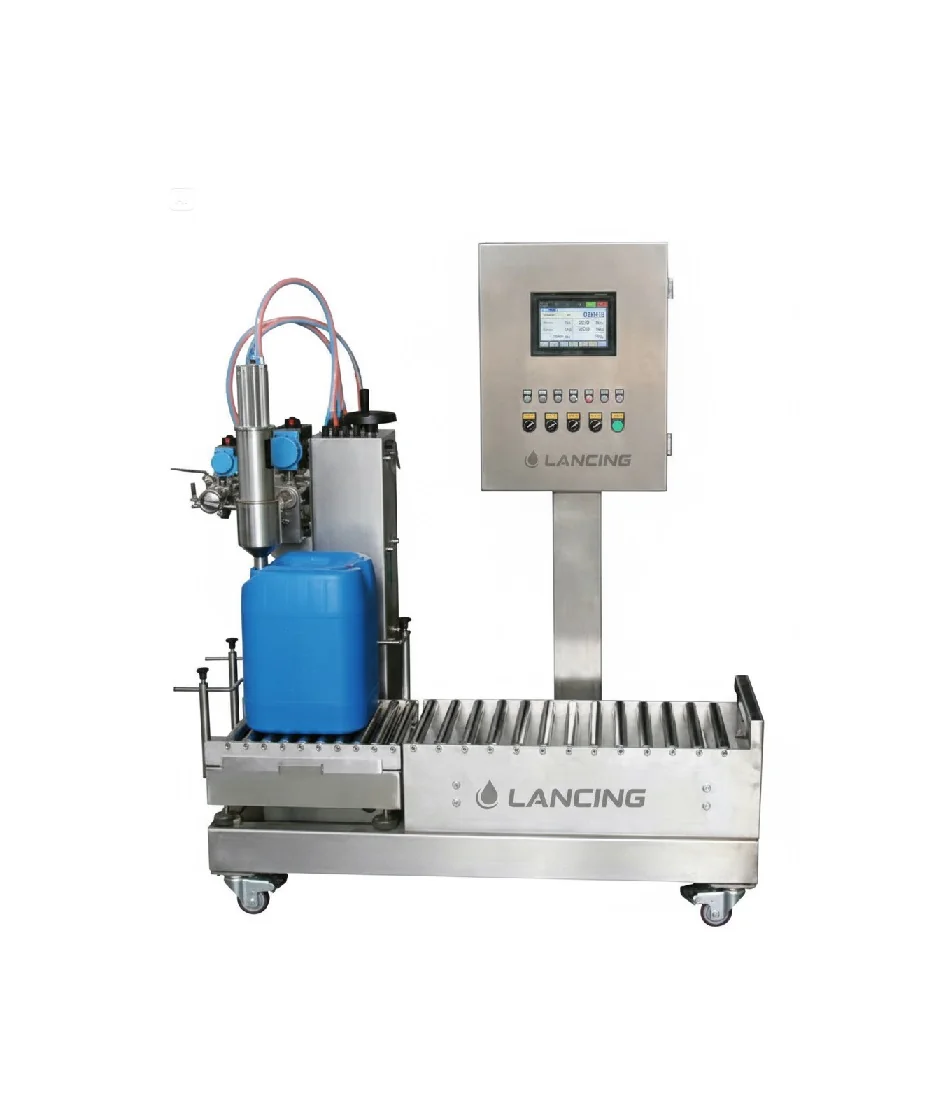
Large drums and intermediate bulk containers change the weighing range, product-transfer rate, nozzle reach, pallet access, operator position, vapour-release scenario and consequences of an overfill. A suitable solution may use load cells or a compatible flowmeter, top or sub-surface filling, monitored earthing and bonding, local extraction, overfill protection and a defined safe response when any permissive is lost.
The final arrangement must be matched to the competent hazardous-area classification and the actual container. Lancing therefore reviews the product Safety Data Sheet, density and viscosity, the fill target, drum or IBC drawings, bung position, pallet format, available product pressure or pump, required output and the customer’s DSEAR information before confirming a machine scope.
References to 200 litre drums or 1000 litre IBCs describe common project formats, not a universal machine range. The configured capacity, accuracy, output, marking, wetted materials and site interfaces are confirmed only against the approved application.
Selection framework
| Project decision | What must be established | Why it changes the design |
|---|---|---|
| Container and pallet | Nominal size, actual dimensions, opening position, venting, pallet footprint, tare variation and safe working load. | Determines scale size, access, nozzle arm travel, guarding, operator reach and handling equipment. |
| Measured quantity | Net mass, gross mass, delivered volume or another agreed acceptance basis. | Influences the choice between load-cell and flow measurement, calibration method and production records. |
| Product behaviour | Density, viscosity, temperature, foam, splash, conductivity, solids, vapour pressure and compatibility. | Changes pump, pipework, fill profile, nozzle, cut-off, cleaning and hazardous-release controls. |
| Top or sub-surface fill | Whether the nozzle fills from above, enters the opening or follows the rising product level. | Affects foam, splash, vapour displacement, nozzle movement, contamination risk and cycle time. |
| Hazardous-area interfaces | Zone, gas group, temperature class, release sources, extraction, earthing and equipment locations. | Sets the protection concept and the boundary between hazardous and non-hazardous equipment. |
| Material movement | Forklift, pallet truck, gravity rollers, powered conveyor or a fixed filling bay. | Defines loading, positioning, collision control, accumulation and the finished-pack route. |
Operating sequence
The correct drum or IBC is placed on the weighing or filling position, with the opening aligned to the nozzle and the pallet stable.
Applicable guard, container-present, earthing, extraction, valve, pump and emergency-stop conditions are checked before product flow is enabled.
A coarse and fine fill, controlled flow ramp or nozzle-lift sequence is used to balance cycle time with foam, splash and cut-off behaviour.
The fill result is accepted against the agreed measurement method, the nozzle is made safe, drips are contained and the pack is released for closure or removal.
Measurement choice
Load-cell filling measures the increase in container mass and naturally accounts for the actual tare when the process is correctly configured. Flowmeter filling measures product passing through the line and can suit applications where the piping, product condition and meter technology provide a reliable measurement.
The best choice depends on density control, air entrainment, product temperature, tare variation, batch records, legal-metrology needs, cleanability, line pressure and the accuracy acceptance method. Use the detailed flowmeter versus load-cell ATEX filling guide to prepare the decision.
Pack and vapour control
A sub-surface or bottom-up route may help with suitable foaming or splash-prone products, but it introduces nozzle-travel, cleaning and interlock requirements. Every large fill displaces gas or vapour from the container, so the release path, extraction hood or vapour-return strategy must be agreed rather than assumed.
Nitrogen purging or inerting is sometimes considered, but it is a separate engineered risk-control measure with oxygen, ventilation and asphyxiation implications. See the nitrogen purging and inerting guide.
Common project mistakes
Quotation brief
Buyer questions
A shared station may be possible when the scale, nozzle arm, fill range, opening access, product supply and handling route cover both formats. The actual containers and pallets must be reviewed because nominal capacity alone does not prove mechanical compatibility.
Weighing is a common large-pack measurement route because it measures the actual mass added to the container, but it is not automatically the best method. Flow measurement may be suitable where the product, piping, meter, calibration and acceptance requirements support it.
An earth clamp cannot make an insulating inner bottle conductive. The complete pack construction, conductive cage or pallet, product conductivity, transfer system and competent electrostatic-risk assessment determine the appropriate controls.
No. Inerting may be one risk-control measure, but its reliability, oxygen concentration, venting, alarms, loss-of-supply response and asphyxiation hazards must be engineered. It does not automatically remove other DSEAR or equipment requirements.
FAT should use the agreed container and a representative product or justified test medium to verify weighing or metering, fill profile, nozzle movement, cut-off, alarms, permissives, data records, operator tasks and the boundary of checks reserved for SAT.
Authoritative UK guidance
HSE guidance on the safe use and handling of flammable liquids and the storage of flammable liquids in tanks provides broader context for controlling release, ignition and handling risks. The final filling installation still requires competent, site-specific assessment.
Plan the complete large-pack route
Lancing can assess the filling method, product path, pack handling, extraction, earthing, controls and closure interfaces as one project brief.
IBC transfer integrity
Separate routine mass or flow control from the protection required for sensor, valve, pump or container failures.
Review suction, pressure, flexible hoses, flow stability, earthing, compatibility, drain-down and safe shutdown.
Specify the liquid, container, fill weight and intended installation before choosing a drum or IBC filler. Share the safety data sheet and your site's area-classification information with the supplier. Container handling, earthing arrangements and the suitability of the complete installation need review alongside the filling equipment.
Related guidance: Bucket & drum filling · nitrogen purging and inerting guide
Share your SDS, hazardous-area information, containers, fill volumes, target output and any capping or labelling stages.