Detection objective
Define whether the system is intended for early leak warning, ventilation control, emergency shutdown, confined-space protection or another specific risk-control function.

Controls and ventilation guide
Define what the detector is intended to detect, where it is installed, how it is maintained and exactly how alarms or ventilation failures affect product supply, filling, capping and safe shutdown.
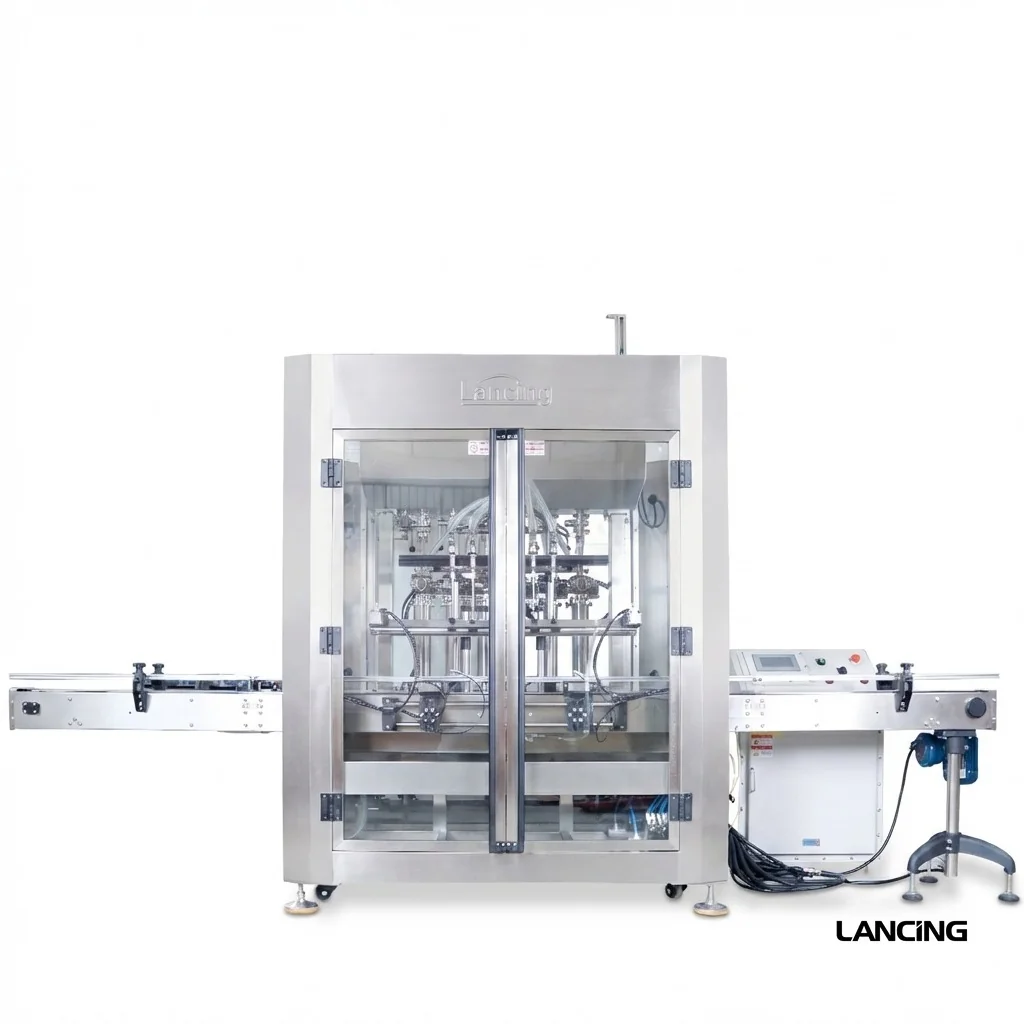
LEL gas detection and ventilation status can form part of a flammable-liquid filling control strategy, but neither is a universal substitute for preventing releases, classifying the hazardous area or selecting suitable equipment. The competent DSEAR assessment must define the detection objective, target vapour, sensor location and limitations, alarm and trip actions, fail-safe state, proof-testing and maintenance responsibilities.
This page explains machinery and control interfaces. It does not set alarm thresholds, design a gas-detection system or approve a site ventilation arrangement.
An LEL detector estimates the concentration of a flammable gas or vapour relative to its lower explosive limit. It does not directly measure flash point, prove that the atmosphere is safe everywhere, or identify every vapour unless the sensor technology and calibration are suitable for the actual substance and conditions.
Define whether the system is intended for early leak warning, ventilation control, emergency shutdown, confined-space protection or another specific risk-control function.
Confirm the target vapour, cross-sensitivity, poisoning or inhibition risks, response time, environmental limits and calibration basis with the detection-system specialist.
Use the release points, vapour behaviour, air movement, obstructions and maintenance access to determine locations. One sensor does not represent an entire room automatically.
The control philosophy should state the permitted state for start-up, normal filling, warning, trip, power loss, extraction failure, detector fault and recovery. If extraction or gas detection is relied on by the risk assessment, the relevant healthy signal normally needs to be proven before product flow is enabled and handled in a defined fail-safe manner when lost.
| Condition | Evidence or signal | Response to define | Acceptance evidence |
|---|---|---|---|
| Extraction unavailable before start | Airflow, pressure or system-ready status appropriate to the site design. | Prevent product feed and filling start; give a clear operator indication. | Signal simulation and start-permissive test at FAT or SAT as allocated. |
| Ventilation lost during filling | Loss of proven healthy status. | Stop or isolate product in the agreed sequence and prevent an automatic restart. | Cause-and-effect test, valve response and retained alarm record. |
| Gas detector warning | Detector alarm from the site system. | Define warning, production response, investigation and escalation without guessing a universal threshold. | End-to-end signal and operator-response test. |
| Gas detector trip | Higher-level alarm or site emergency signal. | Place the filler, product supply and connected line into the defined safe state. | Trip test, reset control and recovery authorisation. |
| Detector fault or calibration overdue | Fault, inhibited channel or maintenance status. | Define whether production is prevented, restricted or subject to an approved temporary control. | Maintenance procedure and management-of-change record. |
Use HSE guidance on leak and gas detection, HSE’s DSEAR guidance and HSE’s explosive-atmospheres overview with a competent site-specific assessment and gas-detection specialist.
Sensor response, calibration and limitations depend on the substance and environment. “LEL detector” is not a complete specification.
Detection is normally a supporting layer. Preventing or containing releases and controlling ignition sources remain fundamental.
An alarm that does not trigger a documented action, safe state, reset rule and responsible role can create false confidence.
Buyer questions
No. Detection does not replace the approved area classification or the requirement to use equipment suitable for its intended location and duty. It may be one risk-control layer when the competent assessment defines its function, response and limitations.
If the risk assessment relies on extraction for the permitted filling condition, loss of proven extraction should produce the defined safe response and prevent uncontrolled restart. The exact sequence must be designed for the product supply, valves, nozzle, container and connected line.
Sensor positions must come from the credible release points, vapour density and behaviour, ventilation pattern, enclosure geometry, obstructions and maintenance needs. The filling-machine supplier can identify release interfaces, but a competent gas-detection designer should confirm the system.
Only if the sensor technology, calibration basis, correction factors and limitations are suitable for the full approved product range. Product changes should be controlled because detector response can vary significantly between vapours.
The control philosophy must define what happens when a detector is faulty, inhibited, out of calibration or unavailable. Where detection is a required protection layer, treating a fault as a healthy condition would undermine the intended safeguard.
Provide the DSEAR basis, ventilation and extraction design, detector type and owner, signal list, alarm philosophy, product-supply isolation method, connected machines and required FAT/SAT tests. Lancing can then define the filling-machine I/O and safe-state boundaries.
Related controls
Define the release-capture and ventilation interfaces before relying on control signals.
Build the permissive, trip, alarm and restart sequence into one cause-and-effect schedule.
Coordinate filler, capper, conveyors, product supply and downstream stops as one process.
Your machine recommendation
Send your product SDS, container details, fill range, target output and any ATEX information. You’ll receive a practical shortlist matched to your application.
☎ 01494 623015✉ sales@lancinguk.comDirect support for new machines, line upgrades and complete filling projects.
Oxygen and flammable-gas monitoring
LEL detection looks for flammable gas or vapour in air, while an inerting system may need to prove that oxygen remains below a defined criterion inside a protected volume. The nitrogen purging and inerting guide explains the additional gas-supply, oxygen-monitoring, venting and asphyxiation controls.
Share your SDS, hazardous-area information, containers, fill volumes, target output and any capping or labelling stages.