
Controls guide
ATEX filling machine controls and interlocks.
Translate the operating case into clear permissives, cause-and-effect responses, safe states, recovery rules and test evidence.
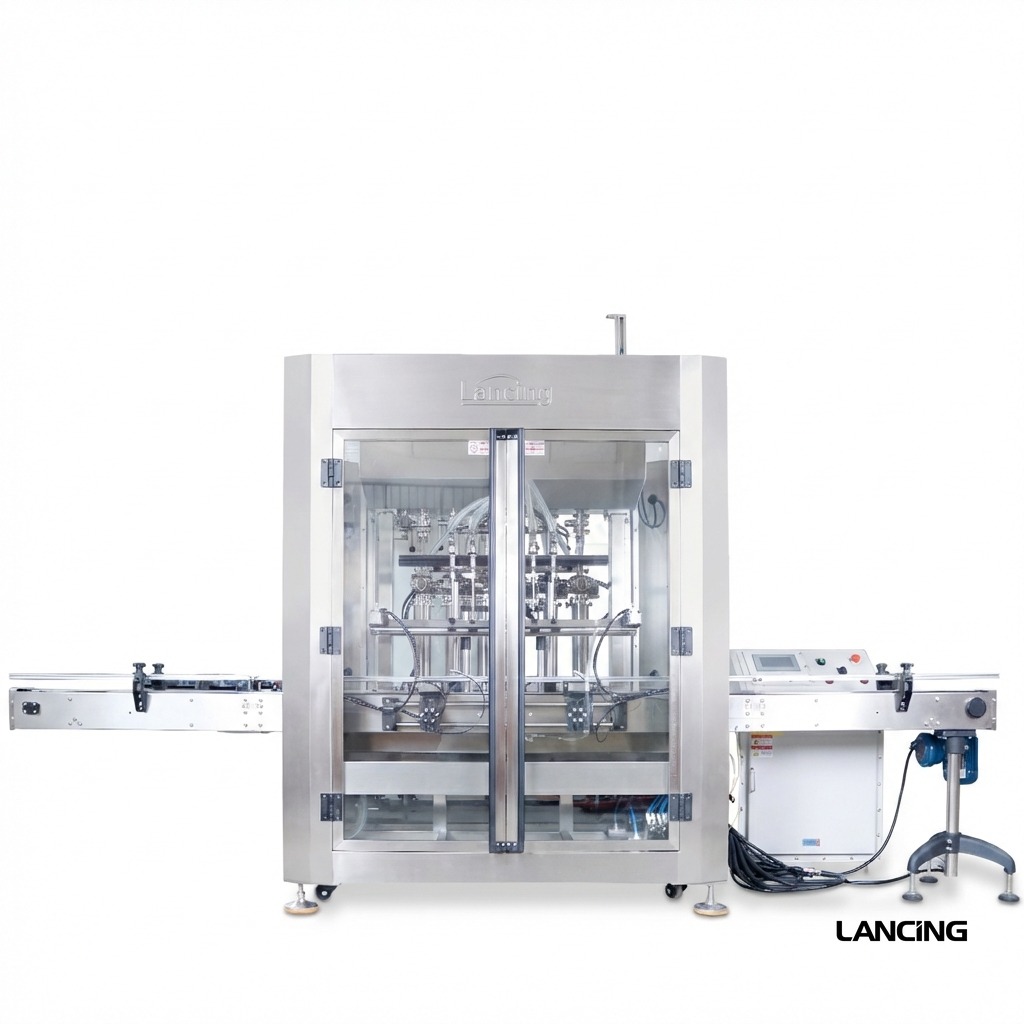
Functional safety and conformity require project-specific design
This guide is a requirements framework. It does not assign safety integrity levels, performance levels, protection concepts or exact stop categories. Those decisions belong to the competent risk assessment and control-system design.
Turn the risk and process assessment into a written cause-and-effect schedule.
An ATEX filling machine control system coordinates product flow, container handling, operator access and the conditions relied on for safe operation. The functional description should state what must be true before a fill starts, what is monitored during the cycle and what state the machine reaches when a condition is lost.
Terms such as “interlocked”, “fail-safe” or “extraction ready” are incomplete without the signal source, logic, response time, reset and proof method.
Cause-and-effect framework
Define each input, machine response and recovery route.
| Condition | Questions to specify | Possible response family to assess |
|---|---|---|
| Container absent or misplaced | How is presence and correct location detected? What happens to an active dose? | Inhibit start, close product valves, withdraw nozzle or controlled reject sequence. |
| Earthing/bonding not proven | Which connection is monitored, when, and for which conductive container or equipment? | Prevent fill, alarm, maintain isolation and require a controlled reset. |
| Extraction unavailable | What signal proves availability and what operating modes rely on it? | Inhibit a new fill, stop product safely, alarm and lock restart until the approved condition returns. |
| Guard or access opened | Which hazardous motion or process is affected and what access is required for operation? | Stop or prevent movement/product flow in the defined safe state. |
| Product-supply abnormality | How are low level, low/high pressure, loss of flow or pump faults detected? | Controlled stop, close valves, prevent empty running, alarm and manage partial containers. |
| Downstream blockage | Where can open or filled containers accumulate and how is capping affected? | Pause infeed/filling, preserve safe spacing, manage the current pack and coordinate restart. |
| Emergency stop or power loss | What energy remains, where can product move and what is required before restart? | Defined de-energised or controlled state, isolation, pressure management and manual recovery. |
Separate process control from protective functions.
Recipe selection, fill profile and production timing are not the same as functions relied on to control a hazardous condition. The design should identify which functions are safety-related or otherwise critical, how they are implemented, and who may change their settings.
Access levels, backups, software version control and change records help prevent a production adjustment from unintentionally altering the approved control strategy.
Coordinate the complete line.
A filler can be affected by the unscrambler, conveyor, capper, labeller, reject station and extraction system. The complete ATEX line page describes the wider project boundary. Signals should have named owners and defined states on start-up, normal running, stop, fault and recovery.
Where existing equipment is retained, its controls and suitability should be reviewed rather than assumed compatible because it previously ran on another line.
FAT and SAT tests
Use a traceable test script linked to the approved functional description.
- Identify every tested input and the method used to simulate it.
- Record the expected and actual response, including product valves and moving parts.
- Test loss and restoration of permissives in each relevant operating mode.
- Confirm alarms, HMI messages, reset conditions and operator access levels.
- Check restart after emergency stop, power loss, downstream blockage and partial cycle.
- Transfer site-dependent extraction, earthing and interface tests into the SAT plan.
Current HSE context includes management, design, installation, operation and maintenance of systems that reduce ignition risks in explosive atmospheres. See HSE explosive-atmosphere guidance and HSE ATEX equipment guidance.
Control FAQs
ATEX filling machine interlock questions.
Is an emergency stop the same as an ATEX safety interlock?
No. An emergency stop is one control function. The project may also require process permissives and protective responses for extraction, earthing, container position, product supply, guards or other conditions identified by the risk assessment.
Should every alarm stop the filler?
Not necessarily. Each alarm needs an agreed severity, response, safe state, reset and record. Some conditions may inhibit a new cycle; others may require immediate isolation or a controlled stop.
Can standard downstream equipment be connected outside the zone?
Potentially, but its physical location, container transfer, controls and influence on the hazardous area still require review. A line interface can affect safe operation even when the device sits outside the classified boundary.
How should bypasses be managed?
Bypasses should be controlled, authorised, visible, time-limited where appropriate and recorded. The risk and operating restrictions while a function is bypassed need approval; routine production should not depend on an informal override.
What should FAT prove?
FAT should test the agreed cause-and-effect logic that can be reproduced at the factory, including normal sequence, permissive loss, alarms, stops, reset and recovery. Site signals and installed extraction or earthing may require SAT tests.
Your machine recommendation
Tell us what you need to fill — we’ll recommend the most suitable machine.
Send your product SDS, container details, fill range, target output and any ATEX information. You’ll receive a practical shortlist matched to your application.
☎ 01494 623015✉ sales@lancinguk.comDirect support for new machines, line upgrades and complete filling projects.
External safety signals
Treat gas detection and ventilation as defined interfaces, not generic tick boxes.
The new LEL gas-detection and ventilation-interlock guide sets out the inputs needed for sensor suitability, alarm philosophy, safe-state response, detector fault handling and end-to-end FAT/SAT tests. Add each required signal to the same cause-and-effect schedule as guards, earthing, product supply and downstream stops.
Abnormal quantity protection
Define whether the overfill trip must be independent of normal fill control.
Large-container projects should document the normal endpoint, high-high condition, final isolation, proof-test method, restart behaviour and any shared failures across instruments, logic, power, valves and pumps.