
Operator-assisted filling
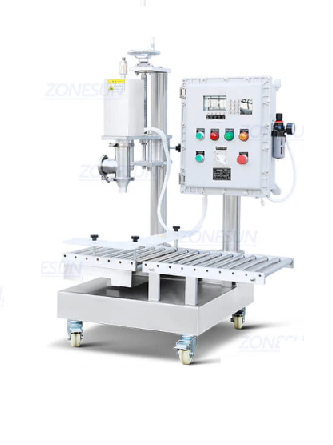
Semi-Automatic ATEX Filling Machines
Control the fill cycle while an operator presents bottles, jerrycans, pails or drums—configured around the product, container, hazardous-area assessment and required production method.
Commercial route
Use operator-assisted filling where flexibility matters more than continuous conveyor automation.
A semi-automatic hazardous-area filler separates the measured dosing cycle from some or all of the container handling. The operator may position the empty pack, connect or confirm any required bonding arrangement, start the cycle and remove the filled pack. The machine can then control the selected dosing method, nozzle movement and permissives within the agreed project scope.
Format flexibility
Useful where several container sizes, short campaigns or changing products make a dedicated high-speed line difficult to justify.
Operator access
Container lifting, positioning, closure handling and exposure need to be designed into the task rather than treated as an afterthought.
ATEX project review
Electrical and non-electrical ignition risks, static, extraction, product supply and cleaning remain part of the complete equipment and workplace assessment.
Choose the operating method
Match the station to the dose, product behaviour and physical handling task.
| Selection question | Why it matters | Evidence to provide |
|---|---|---|
| How is quantity controlled? | Mass-based, piston, pump or flow-meter routes respond differently to density, viscosity, product supply and cleaning. | Target quantity, tolerance, density range, temperature and the method used to verify filled quantity. |
| How is the container presented? | Bottles may sit on a bench or short conveyor; pails and drums may need rollers, platforms or assisted handling. | Dimensions, empty and filled weight, neck opening, base stability and representative samples. |
| What does the operator do? | Manual lifting, clamp connection, start controls, cap placement and removal affect ergonomics, cycle time and exposure. | A task sequence showing every touch point, intervention and abnormal recovery step. |
| Where can product or vapour be released? | Nozzle entry, open packs, drips, sampling, draining and cleaning can create different operating cases. | Current SDS, product temperature, supply arrangement, classification drawing and extraction assumptions. |
| How often does the format change? | Guides, nozzles, recipes, weighing tare and cleaning steps determine usable changeover time. | All intended packs, closures, products and the required changeover and line-clearance method. |
Suitable project situations
Where a semi-automatic route can be commercially useful.
- Lower or intermittent production where continuous conveyor automation is unnecessary.
- Frequent campaign changes that favour accessible product-path and format adjustment.
- Heavy or larger packs that need a weigh platform, roller bed or controlled operator handling.
- Development, pilot or contract-filling work where the product and pack mix changes.
- A staged project where filling is automated before capping, labelling or full line handling.
When to compare another route
Do not use operator assistance to hide an unsuitable production task.
Compare a fully automatic ATEX filling machine when sustained output, repetitive lifting or open-container travel would create an excessive handling burden. Compare an ATEX weigh filler where larger quantities are best controlled by mass, and the bucket and drum route where heavy-pack transfer and nozzle travel dominate the project.
The decision should include staffing, operator access, spill recovery, cleaning, closure handling and safe restart—not only the purchase price of the filler.
Hazardous-area interfaces
Define the permissives and safe state before the control philosophy is approved.
Where required by the project, the fill cycle may depend on conditions such as a container being correctly located, a guard or access point being closed, an earthing system reporting the intended state, extraction being available or the product supply being within agreed limits. The exact logic belongs in the approved functional description and risk assessment.
Before filling
Confirm container presence and stability, nozzle position, selected recipe, product availability and any required safety permissives.
During dosing
Control fill profile, nozzle movement, quantity measurement and the response to loss of a permissive, abnormal flow or operator stop.
After the fill
Manage cut-off, drips, nozzle withdrawal, pack release, closure handling, residual product and the transition to the next cycle.
See the controls and interlocks guide and the earthing and bonding guide for a structured project discussion.
Buyer questions
Questions about semi-automatic ATEX filling.
What is a semi-automatic ATEX filling machine?
It is a project-configured filling station in which an operator normally presents or removes the container while the machine controls the measured fill cycle. The final arrangement, protection concept and documentation must match the declared hazardous-area and intended-use requirements.
When is semi-automatic filling preferable to a fully automatic line?
It can be practical for lower or variable volumes, frequent product or pack changes, larger containers, trial production or a staged investment. The decision should be based on the complete operating cycle, operator exposure, handling burden and required sustained output.
Can one semi-automatic station fill several container sizes?
Potentially. Container stability, neck access, nozzle travel, dose range, tare handling and change parts must be reviewed for every format. Real containers should be included in the trial and FAT plan.
Does the operator have to earth every container?
That depends on the product, container material, process and competent static-control assessment. Conductive containers may use monitored bonding arrangements; insulating packs require a wider review and should not be treated as earthed simply because a clamp is present.
What should be provided for a quotation?
Send the current SDS, product behaviour, containers, fill range, target batches or output, site classification information, utilities, cleaning method and any required capping, weighing or conveyor stages.
Your machine recommendation
Tell us what you need to fill — we’ll recommend the most suitable machine.
Send your product SDS, container details, fill range, target output and any ATEX information. You’ll receive a practical shortlist matched to your application.
☎ 01494 623015✉ sales@lancinguk.comDirect support for new machines, line upgrades and complete filling projects.
Pneumatic station evidence
A compressed-air filler still needs a complete hazardous-area review.
Operator-assisted and fully pneumatic filling can reduce the electrical equipment at the fill point, but mechanical ignition, static, hoses, valves, foot controls, product release, cleaning and loss-of-air behaviour remain. Read why a pneumatic filler is not automatically ATEX safe and use the earthing and static-control guide for the container and transfer route.