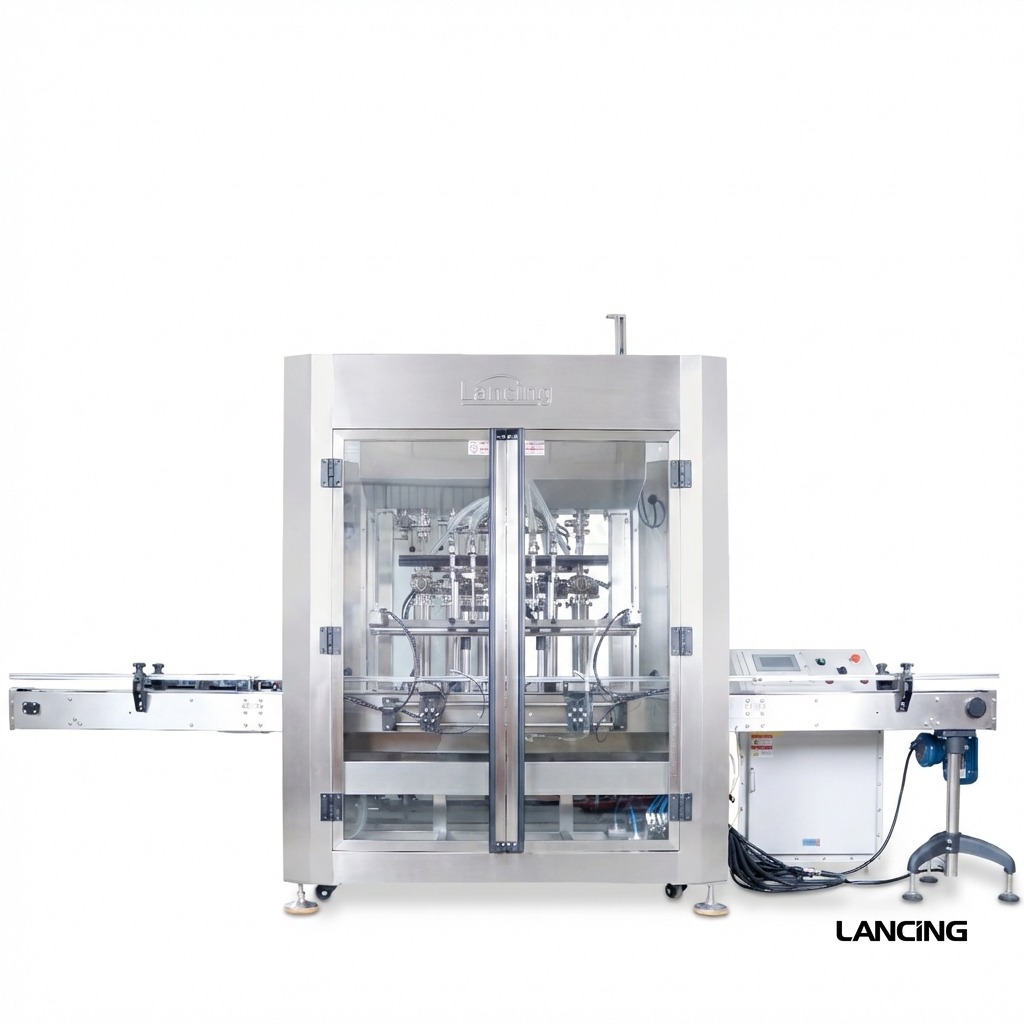
DSEAR and ATEX guide
DSEAR and ATEX filling equipment: responsibilities, zones and project boundaries.
Clarify the workplace assessment, hazardous-area classification, equipment specification, earthing, extraction and handover information needed for a controlled filling-machinery project.

Scope and safety boundary
This guide supports commercial and engineering scoping. It is not a substitute for a competent DSEAR risk assessment, hazardous-area classification, installation design, conformity assessment or legal advice. The site operator and responsible equipment manufacturer retain their respective duties.
DSEAR and ATEX solve different parts of the same project
In Great Britain, DSEAR places duties on employers and the self-employed to assess and control workplace risks from dangerous substances. The Equipment and Protective Systems Intended for Use in Potentially Explosive Atmospheres Regulations 2016 address equipment and protective systems placed on the market for use in potentially explosive atmospheres.
For a filling project, the workplace assessment establishes the dangerous substances, activities, credible releases, hazardous-area classification and control measures. The machinery specification uses those inputs to define intended use, equipment protection, ignition-source controls, materials, interfaces, documentation and installation requirements.
A supplier can provide equipment information and participate in interface reviews, but should not guess the site zone from a product name or assume responsibility for facility ventilation without an agreed scope.
Responsibility matrix
Decide who owns every input before the quotation is approved.
| Decision | Information required | Typical project owner |
|---|---|---|
| Dangerous-substance assessment | Substances, quantities, activities, releases, consequences and control measures. | Employer/site operator with competent support. |
| Hazardous-area classification | Zone, boundaries, gas or dust group, temperature requirements and ventilation assumptions. | Competent assessor appointed by the site/project. |
| Machinery intended use | Products, packs, doses, output, operating modes, cleaning and foreseeable misuse. | Purchaser and Lancing. |
| Equipment protection and conformity | Declared classification, ignition-risk assessment, components, documentation and applicable assessment. | Responsible manufacturer/economic operator for the supplied scope. |
| Facility extraction and services | Airflow or containment performance, power, air, drainage, fire controls and installation. | Named facility or project designer. |
| Commissioning and operation | Inspection, SAT, procedures, training, maintenance and change control. | Site operator with supplier/contractor scope agreed. |
Zone context
Use the competent area classification—not a generic distance from the nozzle.
HSE guidance describes gas, vapour and mist zones by the frequency and duration of an explosive atmosphere. The classification should identify release sources and boundaries for the real room, process, ventilation and operating method.
| Zone | Practical definition | Filling-project questions |
|---|---|---|
| Zone 0 | Explosive atmosphere present continuously or for long periods. | Is this inside product equipment, at the point of fill or elsewhere? What protection concept and process containment are required? |
| Zone 1 | Explosive atmosphere likely to occur occasionally in normal operation. | Which normal releases create it, what are the boundaries, and what equipment or operators enter the area? |
| Zone 2 | Explosive atmosphere not likely in normal operation and, if it occurs, present only briefly. | Which abnormal release is considered, what limits its duration and what equipment remains within the boundary? |
The zone alone is not a complete equipment specification. Provide the gas or vapour group, temperature requirements, zone boundaries, ventilation assumptions and intended equipment location. The classification may distinguish the inside of a process vessel, the immediate filling point and the wider room.
Ignition and release control
Review the complete process through production, cleaning and maintenance.
Ignition sources
Electrical equipment, hot surfaces, electrostatic discharge, friction, impact, bearings, mechanical sparks, heating and temporary maintenance equipment all require consideration where relevant.
Release sources
Product supply connections, pump seals, hoses, nozzles, open containers, drips, rejects, sampling, drainage and cleaning can each create different release conditions.
Control measures
Elimination or substitution, closed transfer, containment, ventilation, extraction, earthing and bonding, protected equipment, detection, interlocks and operating procedures may form a combined strategy.
Earthing, bonding and extraction
Specify interfaces with measurable responsibilities.
Earthing and bonding
Identify conductive equipment, pipework, drums, transfer hoses and other items that require a controlled path. State how continuity is verified, whether a monitored clamp or permissive is included and what the machine does if the required condition is absent.
Insulating plastic containers cannot be treated as though a clamp automatically makes them conductive. The static-control solution needs to address the product, fill method, container, operator and surroundings as a system.
Extraction and ventilation
Record who designs the extraction, the required capture or airflow criterion, the operating modes covered, the commissioning method and the maintenance responsibility. If machine operation depends on extraction, define the signal, failure response and restart logic.
Do not use a room ventilation assumption to avoid reviewing the release at the nozzle. Equally, do not treat a local hood as a complete DSEAR solution without considering product supply, cleaning and downstream open-container travel.
Information for Lancing
Provide a controlled project pack rather than isolated emails.
- Current SDS and formulation or concentration information where relevant.
- Product temperature, viscosity, density, conductivity, foam, particles and cleaning method.
- Area-classification drawing, zone, gas or dust group, temperature requirements and assumptions.
- Container and closure drawings or samples, dose range and sustained output.
- Product-supply arrangement, utilities, extraction and drainage interfaces.
- Filling, capping, labelling, coding, inspection and conveyor scope.
- Required documentation, FAT, SAT, training, maintenance and future change control.
Open the machine specification checklist Plan trials and FAT
Guide FAQs
Questions to close before the project specification is approved.
What is the difference between DSEAR and ATEX equipment requirements?
DSEAR concerns the employer’s workplace assessment and control of risks from dangerous substances. The 2016 equipment regulations concern products intended for use in potentially explosive atmospheres. A filling project needs the site classification and controls to align with the supplied equipment’s intended use and documentation.
Who defines the hazardous-area zone for a filling line?
The site or project should appoint a competent person to complete the area classification. Lancing can use the resulting zone, boundaries, gas or dust group, temperature requirements and assumptions to develop the machine specification, but should not infer them from the product name.
Does Zone 2 always mean a standard filling machine is acceptable?
No. Zone 2 is still a classified area. The intended use, explosive-atmosphere type, equipment location, ignition sources and applicable equipment protection must be assessed against the competent classification.
Does a certified motor make the complete machine ATEX suitable?
No. The assembled machine includes electrical and non-electrical ignition risks, moving parts, controls, product transfer, static, hot surfaces and interfaces. Individual certified components support but do not replace the complete equipment assessment.
Who is responsible for extraction around the filler?
The project must name the responsible designer and installer. Extraction may be a facility system, a machine interface or a combined supply. Performance, commissioning, maintenance and any machine interlock should be defined in writing.
Can the project proceed while the DSEAR assessment is incomplete?
Preliminary selection can proceed with clear assumptions and open actions. The final machinery protection, marking, documentation and installation scope cannot be responsibly closed until the required competent classification information is available.
Your machine recommendation
Tell us what you need to fill — we’ll recommend the most suitable machine.
Send your product SDS, container details, fill range, target output and any ATEX information. You’ll receive a practical shortlist matched to your application.
☎ 01494 623015✉ sales@lancinguk.comDirect support for new machines, line upgrades and complete filling projects.